
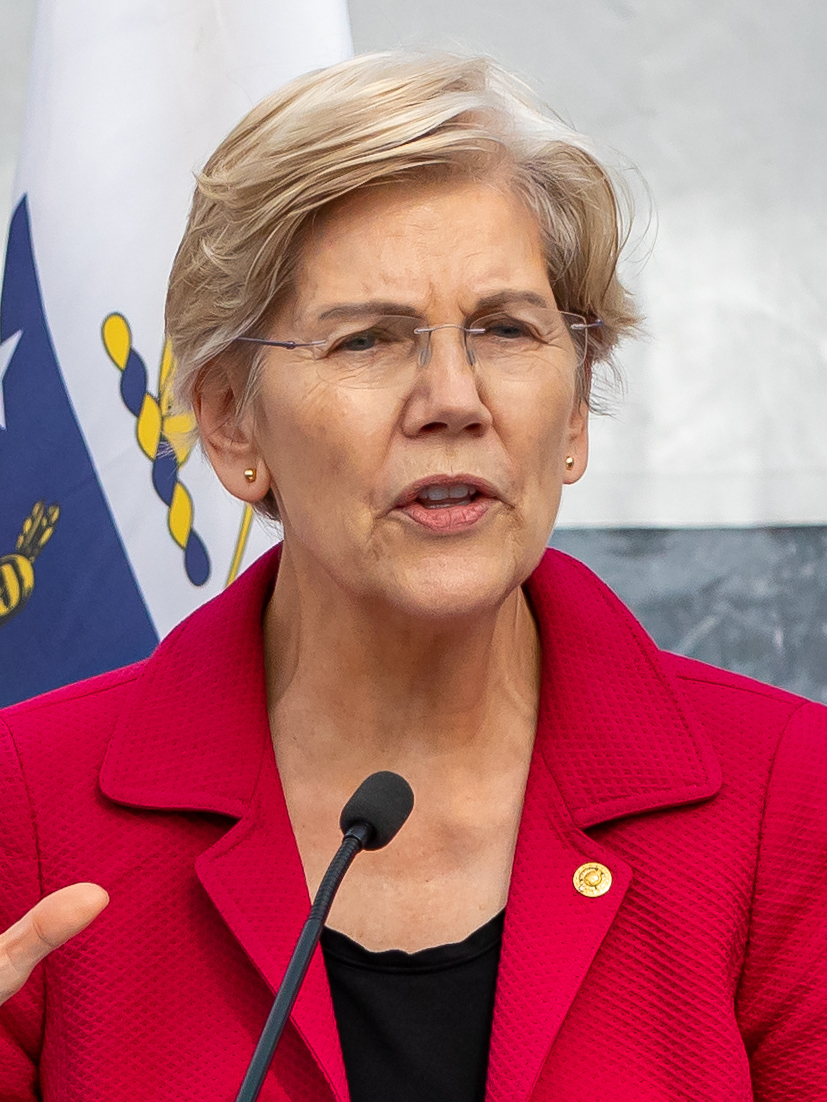
Elizabeth Warren is the senior United States senator from Massachusetts, serving since 2013. A former law professor and leading scholar of bankruptcy and consumer finance, she became a national figure after the 2008 financial crisis through her work on stricter banking oversight and consumer protection.
Born June 22, 1949, in Oklahoma City, Warren studied at the University of Houston and earned her law degree from Rutgers. She taught at several universities, including the University of Texas, the University of Pennsylvania, and Harvard, and wrote extensively on household debt, bankruptcy, and the economic pressures facing the middle class.
In government, Warren chaired the Congressional Oversight Panel for the Troubled Asset Relief Program (TARP) and helped design and establish the Consumer Financial Protection Bureau. In the Senate, she has focused on anti-corruption policy, consumer safeguards, student debt relief, antitrust enforcement, and a stronger social safety net.
Warren ran for president in the 2020 Democratic primaries, building a campaign defined by detailed policy proposals and a populist critique of concentrated corporate power. She has since remained a central progressive voice in the Senate and a high profile interrogator in oversight hearings.
Progressive
Committee Assignments
Caucus Memberships
Achievements
- Key architect of the Consumer Financial Protection Bureau and a national leader on consumer safeguards after the 2008 crisis.
- Built a high-profile Senate brand around anti-corruption, oversight, and aggressive scrutiny of Wall Street and corporate consolidation.
- Major advocate for student debt relief, universal childcare, and expanded social insurance programs.
- Pushed antitrust enforcement and tougher rules for Big Tech, private equity, and large corporate mergers.
- Influential progressive agenda-setter inside the Democratic coalition, with a deep bench of policy staff and protégés.
Controversies
- Faced extended scrutiny over past claims of Native American ancestry, including criticism from tribal leaders and public backlash during national campaigns.
- Regularly clashes with moderates and business groups over proposals like wealth taxes, strict financial regulation, and corporate breakup policies.
- Accused by critics of favoring aggressive regulatory approaches that could reduce investment or constrain financial markets.
- Became a recurring GOP target in national messaging as a symbol of “left-wing economic” politics.
- High-visibility presidential run created intra-party friction over tactics, coalition-building, and “plan-heavy” governance.
Top Donors
| Donor | Total | Individuals | PACs |
|---|---|---|---|
| Massachusetts Institute of Technology | $41,402 | $41,402 | $0 |
| Google Inc | $39,579 | $39,579 | $0 |
| Harvard University | $38,162 | $38,162 | $0 |
| Boston University | $26,974 | $26,974 | $0 |
| Apple Inc | $25,398 | $25,398 | $0 |
Amounts shown reflect organization-linked giving; most funds listed here are from individual donors or aligned PACs.
Recent Elections

2012 Margin D +8%

2018 Margin D +24%
2024 Margin D +29%