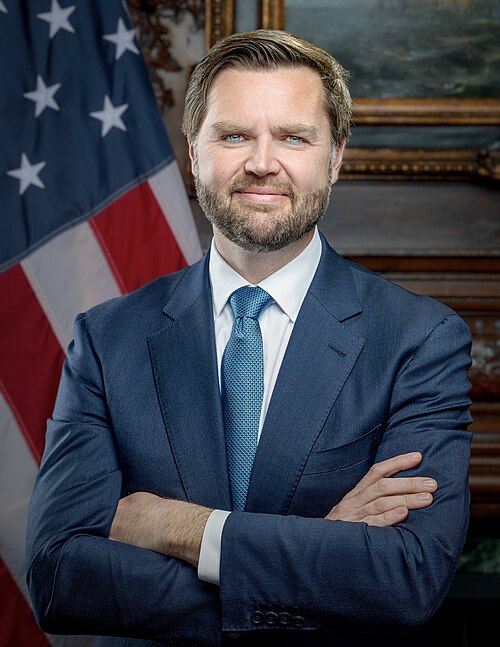
James David Vance is an American politician and author serving as the 50th Vice President of the United States. A Republican, he represented Ohio in the United States Senate from January 3, 2023 to January 10, 2025, resigning shortly before being sworn in as Vice President on January 20, 2025.
Vance was born and raised in Middletown, Ohio. His early life was shaped by poverty, family instability, and his mother’s struggles with drug addiction, and he and his sister were raised largely by their maternal grandparents, whom he called Papaw and Mamaw. He enlisted in the United States Marine Corps in 2003, serving as a combat correspondent and public affairs military journalist with the 2nd Marine Aircraft Wing. He deployed to Iraq in 2005 for six months in a noncombat role writing and photographing, attained the rank of corporal, and earned decorations including the Marine Corps Good Conduct Medal and the Navy and Marine Corps Achievement Medal.
After leaving the Marines in 2007, he used the GI Bill to attend Ohio State University, graduating in 2009 summa cum laude with a BA in political science and philosophy. He earned a JD from Yale Law School in May 2013, worked on The Yale Law Journal’s staff, and built a long-running relationship with Silicon Valley donors and networks after meeting Peter Thiel during law school. He changed his surname to Vance in April 2013. After a brief corporate law period, he moved into venture capital, including work tied to Thiel’s Mithril Capital, and later co-founded Narya Capital in Cincinnati with backing from Thiel and other tech-finance patrons.
Vance gained national prominence with his 2016 memoir Hillbilly Elegy, which became a defining text in media and academic attempts to interpret postindustrial dislocation and working-class realignment. He was initially a vocal critic of Donald Trump in 2016, but later moved into the pro-Trump orbit, won a crowded Ohio Republican Senate primary in 2022 with Trump’s endorsement, and defeated Democrat Tim Ryan in the general election by a 53 percent to 47 percent margin. In July 2024, Trump selected Vance as his running mate, and Vance became Vice President in January 2025. During his vice-presidential tenure, he also became finance chair of the Republican National Committee and has been framed as a national conservative and right-wing populist aligned with the postliberal New Right.
Right-Wing Populist
Vice Presidential Priorities
Achievements
- Converted a memoir-driven national profile into electoral power, winning Ohio’s 2022 U.S. Senate race and becoming a central figure in postindustrial, working-class Republican messaging.
- Won a crowded 2022 Republican primary with decisive Trump endorsement backing, demonstrating coalition integration into the MAGA-aligned party center.
- Elevated “national conservative” priorities inside the executive branch as Vice President, pushing immigration restriction, anti-institution politics, and anti-globalist economic framing.
- As Vice President, played an unusually visible institutional role early in the administration, including high-profile Senate tie-breaking power and public arguments about executive authority.
- Built a durable donor-and-network bridge between tech-finance patrons (Thiel ecosystem) and right-populist movement politics, expanding the coalition’s funding and talent pipeline.
- Cemented a national succession narrative as an ideological heir to Trumpism: younger, more explicitly postliberal, and more willing to frame politics as institutional seizure.
- Used culture and natalist rhetoric to re-center “family policy” as a right-wing identity project, including calls to expand the child tax credit and reward parenthood in public policy.
- Positioned skepticism of long-term Ukraine support as a core GOP-nationalist foreign policy plank, accelerating intra-party realignment on the post-2016 international order.
Controversies
- High-profile ideological pivot from “never Trump” style 2016 criticism to full Trump inner-circle leadership produced long-running allegations of opportunism and ambition-first politics.
- Repeated inflammatory remarks about childlessness and “cat ladies” created sustained backlash, with critics arguing the rhetoric stigmatizes citizens and weaponizes family status.
- Immigration-related claims during 2024 campaign season, including disputed allegations about Haitian immigrants in Springfield, triggered intense scrutiny and were linked to heightened tensions and threats against the community.
- Foreign policy posture described by opponents as isolationist, especially on Ukraine, with critics warning it signals weakness to Russia and undermines alliances.
- Statements asserting judges should not constrain the executive and broader “seize the institutions” rhetoric fueled accusations of authoritarian instincts and contempt for liberal checks and balances.
- A string of culture-war escalations and contemptuous public attacks on opponents intensified polarization and reinforced the view that grievance is a governing strategy, not just a campaign tactic.
- Scrutiny over nonprofit and business ventures linked to political ambition narratives, including criticism that some efforts produced limited measurable outcomes relative to fundraising.
- Critics argue his postliberal program implies aggressive state power over civil society, universities, and media, risking constitutional and rights-based conflict.
Top Donors
| Donor | Total | Individuals | PACs |
|---|---|---|---|
| National Republican Senatorial Cmte | $51,200 | $0 | $51,200 |
| Kaivac Inc | $44,145 | $44,145 | $0 |
| Republican Jewish Coalition | $36,088 | $31,088 | $5,000 |
| Ark Malibu LLC | $29,000 | $29,000 | $0 |
| Grote Enterprises | $27,000 | $27,000 | $0 |
Amounts shown reflect organization-linked giving; most funds listed here are from individual donors or aligned PACs.
Recent Elections

2022 Result Won R +6
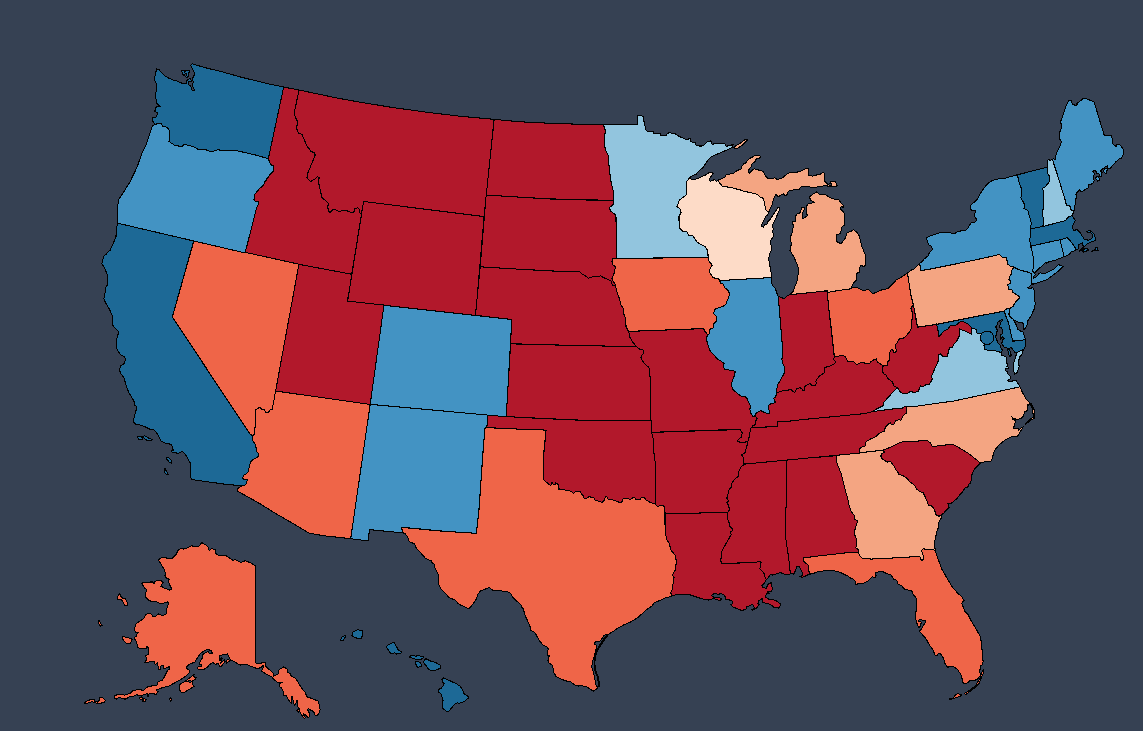
2024 Result Won (National Ticket)