
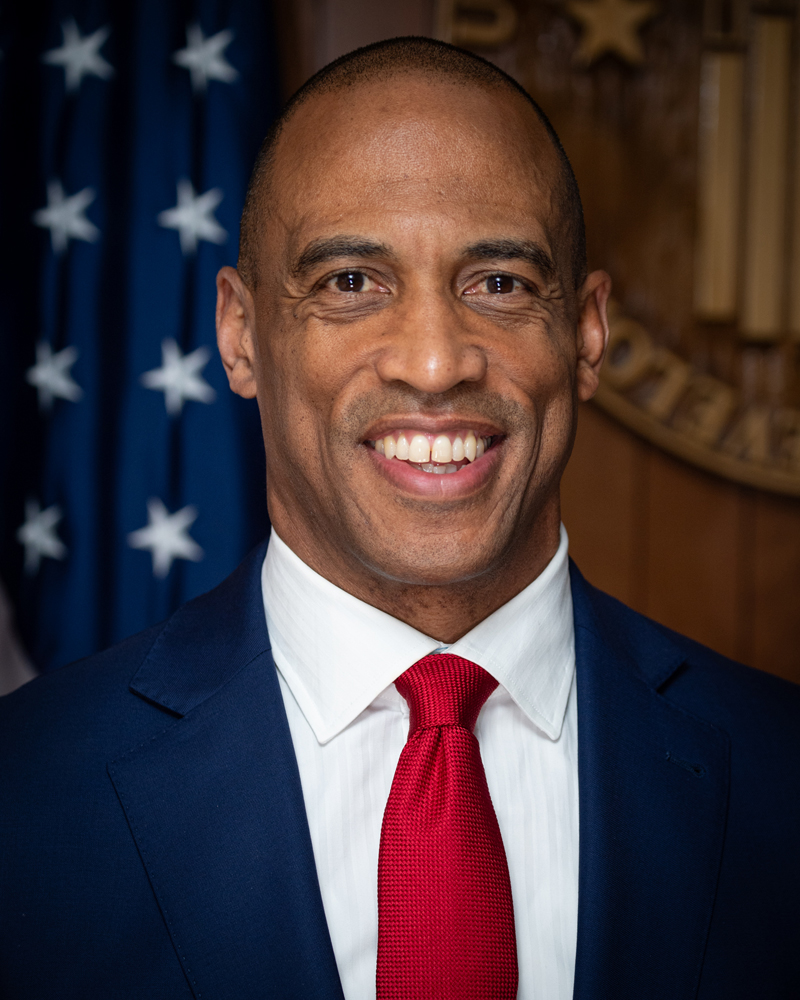
Eric Scott Turner (born February 26, 1972) is a fourth generation Texan who moved from elite athletics into politics and then into executive branch governance. He grew up in the Dallas area, was raised around Mount Pisgah Baptist Community Church (where his family has been active since 1898), and has repeatedly framed his life as a discipline story: at age 10, after his parents divorced, he told his mother he was going to play in the NFL.
Turner graduated from Pearce High School in 1990, where he ran track and played football, and worked as a dishwasher at Spring Creek Barbeque in Richardson, Texas. He then attended the University of Illinois on a full academic and athletic scholarship, initially playing wide receiver before switching to cornerback his senior year. In track, he specialized in the 200 and 400 meters, winning Big Ten Indoor Freshman of the Year in 1991 and capturing Big Ten 400 meter indoor titles in 1992 and 1993. He earned First Team All Big Ten honors (1992, 1993, 1994) and All America status as part of Illinois relay teams. He graduated in 1995 with a degree in speech communications.
His NFL career ran nine seasons. Drafted in the seventh round of the 1995 NFL Draft by the Washington Redskins (now the Washington Commanders), he played cornerback there from 1995 to 1997. He then played for the San Diego Chargers from 1998 to 2002 and signed with the Denver Broncos in 2003, before a 2004 leg injury during training camp ended his playing career. Across 101 NFL games, he recorded 89 tackles, five interceptions (including one pick six), and two sacks. Afterward, he remained connected to the league through player transition and advisory roles.
Turner’s political path started inside Congress: during the 2003 NFL off season, he interned for U.S. Representative Duncan Hunter, later taking a full time job in the office. He ran in the 2006 special election for California’s 50th congressional district but finished eighth in the blanket primary, then moved back to Frisco, Texas. In 2012 he won election to the newly created Texas House District 33 (parts of Collin County and all of Rockwall County) and served two terms from January 2013 to January 2017. In January 2015 he challenged Joe Straus for Speaker of the Texas House, losing 127 to 19 in the first recorded speaker vote since 1976.
In the first Trump administration, Turner became Executive Director of the White House Opportunity and Revitalization Council (2019 to 2021), leading an interagency Opportunity Zones initiative designed to steer private investment into distressed areas and to promote affordable housing and small business creation. Parallel to public service, he built a long private sector resume: from 2007 to 2023 he worked at Systemware (a content management software company), including as chief inspiration officer; he founded and led the Community Engagement and Opportunity Council supporting children living in poverty; he received an honorary Doctor of Humanities from Dallas Baptist University in 2016; and in June 2023 he became Chief Visionary Officer of JPI, a national multifamily developer and investment manager focused on attainable and affordable housing.
On November 22, 2024, President elect Donald Trump announced his intent to nominate Turner as Secretary of Housing and Urban Development. Turner testified before the Senate Banking, Housing and Urban Affairs Committee on January 16, 2025; the committee advanced the nomination 13 to 11 on January 23, 2025; and the full Senate confirmed him on February 5, 2025 by a vote of 55 to 44. He was sworn in later that day by Supreme Court Justice Clarence Thomas. As HUD Secretary, Turner has pitched a build-first, deregulation-forward approach, and has drawn attention for aggressive administrative moves including plans to relocate HUD headquarters and mandating the HUD website operate exclusively in English while canceling non English services.
Right Wing Populist
Achievements
- Led the White House Opportunity and Revitalization Council (2019 to 2021), coordinating an interagency initiative to steer Opportunity Zone investment toward distressed communities.
- Built a rare cross sector profile that blends athletics, legislative politics, executive branch implementation, and housing development leadership (including senior roles at Systemware and JPI).
- As HUD Secretary, centered a supply first theory of housing affordability, prioritizing construction speed, permitting compression, and reduced compliance friction.
- Maintained deep ties to faith based and community engagement work, including founding and leading the Community Engagement and Opportunity Council supporting children living in poverty.
- Consolidated a populist governance brand that frames homeownership, neighborhood stability, and revitalization as national priorities rather than niche policy silos.
Controversies
- Critics argue that mandating the HUD website operate exclusively in English and canceling non English services reduces access for limited English proficiency households.
- Opponents say a build first, red tape cutting posture can weaken protections against discrimination and reduce accountability for local exclusion.
- Detractors contend that OZ style incentives can subsidize investment returns more than they help low income residents if guardrails are weak.
- Proposals to relocate HUD headquarters have been criticized as disruptive to staff capacity and institutional continuity.
- Supporters see moral clarity; critics argue that spiritual and values framing can function as a proxy for narrowing civil rights priorities and shifting HUD into a political messaging platform.
Senate Confirmation Vote
Votes For
Votes Against