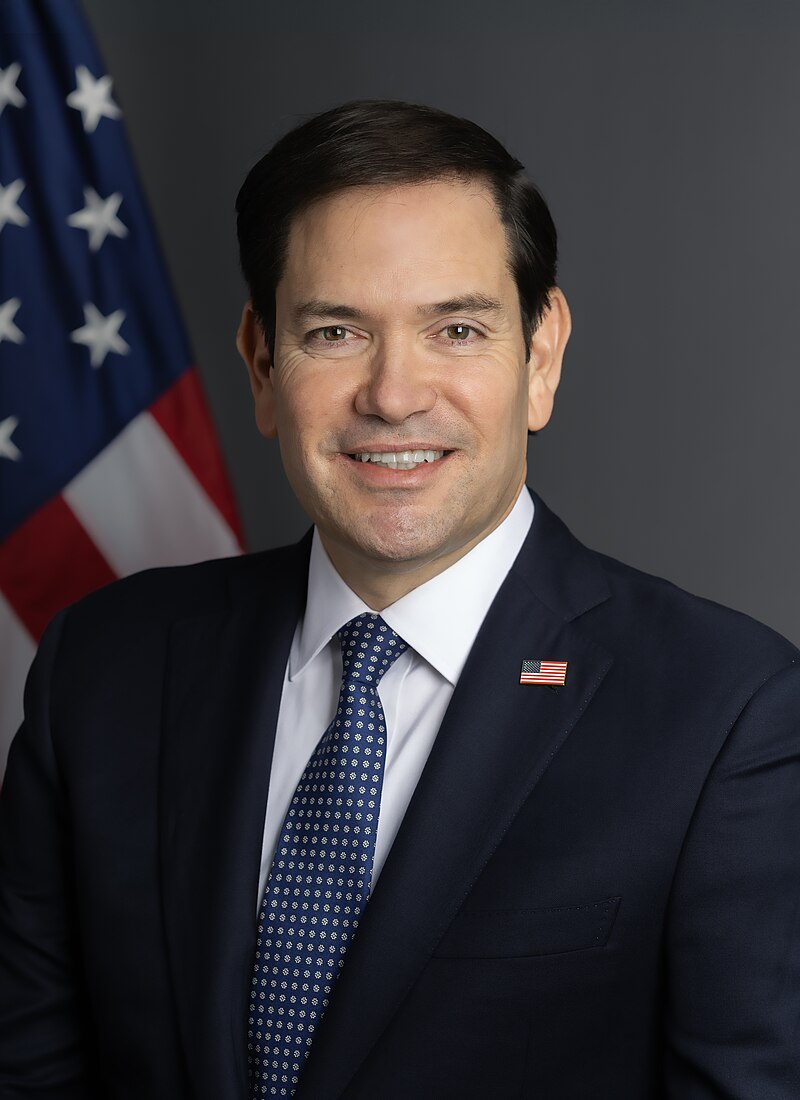
Marco Antonio Rubio is an American politician and diplomat who rose to national prominence as a Florida senator and a Republican voice on foreign affairs, China, and national security. A polished communicator, Rubio blends traditional GOP language about American leadership with Trump-era nationalism, often framing overseas threats as direct risks to U.S. safety, borders, and economic strength.
In the Senate, Rubio built a reputation as a hawkish strategist, especially on China and the Chinese Communist Party, while maintaining deep relationships across the party’s donor and defense-policy ecosystem. He has repeatedly pushed sanctions, export controls, and supply-chain reshoring as the core toolkit of modern U.S. competition strategy.
As Secretary of State, Rubio presents himself as the administration’s “resolve” messenger: alliance pressure, coercive diplomacy, and hard-edged deterrence, paired with transactional bargaining over resources, security guarantees, and border-adjacent cooperation in the Western Hemisphere.
Rubio’s leadership profile sits between factions: he can speak fluent “Reagan hawk” to reassure establishment Republicans while translating the same posture into “America First” terms for a populist coalition. Critics call it opportunistic; supporters call it strategic adaptation.
Mainstream Conservative
Achievements
- Built one of the GOP’s most durable “China hawk” brands, mainstreaming sanctions, tech controls, and supply-chain security as core policy tools.
- Developed deep Senate relationships across national-security and foreign-policy circles, translating Hill constraints into executive-branch strategy.
- Became a high-visibility messenger linking overseas threats to domestic security framing (border, fentanyl, cyber, proxies).
- Maintained credibility with traditional conservative donors while adapting rhetoric to Trump-era nationalism.
- Elevated Cuban-American political identity into a major national profile within the Republican Party.
Controversies
- Criticized as overly interventionist by populist Republicans who distrust long-term security commitments abroad.
- Accused of positioning every diplomatic moment as a personal brand-building platform for future presidential ambitions.
- Long-running tension between human-rights language and transactional realism; attacked as “globalist” from the right and “selective” from the left.
- Hardline immigration and border rhetoric can complicate regional cooperation, particularly in the Western Hemisphere.
- Constant balancing act between classic GOP hawkishness and Trump-aligned priorities invites “opportunism” claims.
Top Donors
| Donor | Total | Individuals | PACs |
|---|---|---|---|
| Club for Growth | $680,751 | $680,751 | $0 |
| Elliott Management | $440,120 | $440,120 | $0 |
| Goldman Sachs | $371,517 | $346,517 | $25,000 |
| The Villages | $259,321 | $259,321 | $0 |
| Blackstone Group | $203,775 | $195,275 | $8,500 |
Amounts shown reflect organization-linked giving; most funds listed here are from individual donors or aligned PACs.
Senate Confirmation Vote
Votes For
Votes Against