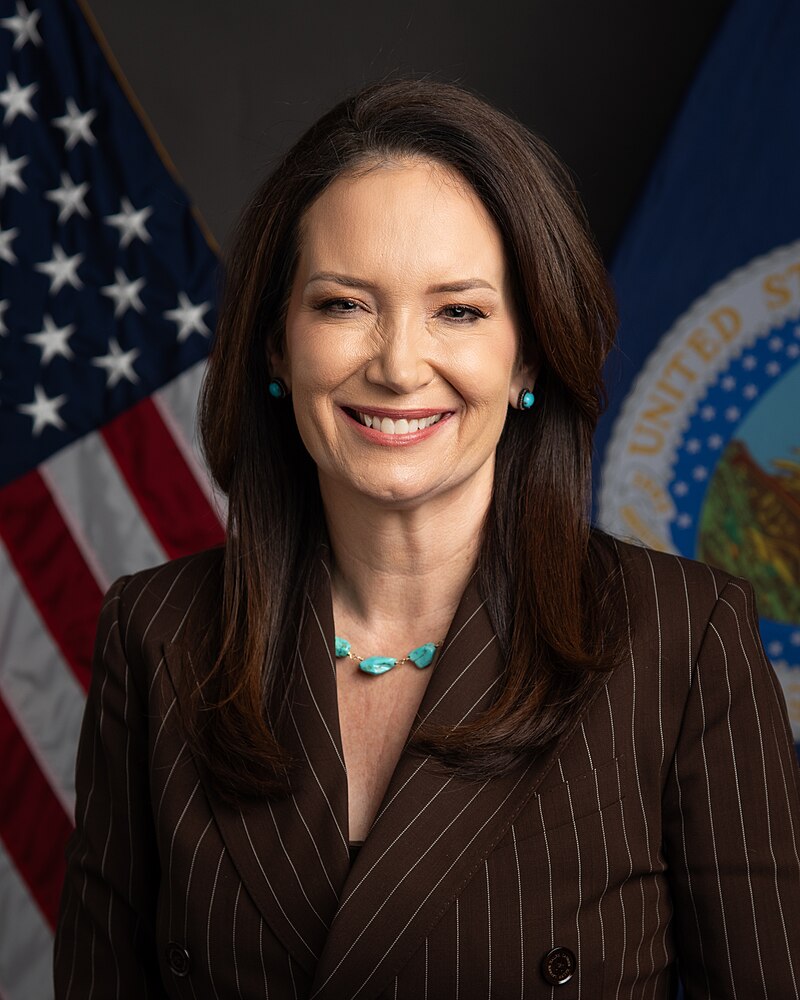
Brooke Rollins is a Texas rooted policy operator who moved from state level governance into national conservative agenda building. Her identity is not just “farm policy” technocrat, she is a movement aligned strategist who treats agencies as instruments for priorities like border enforcement, cultural signaling, and reshaping the welfare state.
Rollins built her early career in Texas politics, including senior roles under Governor Rick Perry where she handled legal and policy work. She later ran the Texas Public Policy Foundation for years, helping turn a small think tank into a major conservative policy pipeline with national influence. That background matters because it trained her in long horizon agenda design: draft the model bills, build the coalitions, and then translate ideology into executable rules once the window opens.
In the first Trump administration, she moved into the White House orbit, working on domestic policy priorities and acting as a bridge between policy staff, messaging, and executive action. After Trump left office, she co founded and led the America First Policy Institute, which functioned like a shadow policy shop: staffing lists, executive order templates, and a governing narrative ready to deploy on day one.
As Secretary of Agriculture, Rollins sits at an unusually powerful crossroads: farms and rural politics, nutrition programs and anti poverty spending, land and water, food prices, commodity systems, and the labor reality of agriculture. Her approach emphasizes enforcement and leverage. She frames food and farmland as national security assets, pushes hard on immigration and labor narratives, and treats nutrition policy as an arena for discipline, work requirements, and eligibility tightening.
The political profile is clear: she is comfortable in populist media combat, but her real strength is institutional: building frameworks, aligning stakeholders, and using bureaucratic machinery to lock in a governing direction. Supporters see a decisive executive manager. Critics see an ideological conversion of USDA into a culture and border messaging platform.
Right Wing Populist
Achievements
- Built a national policy apparatus through think tank leadership, translating ideological themes into implementable agency and legislative agendas.
- Became a high trust movement messenger who can operate across media, donors, and executive branch stakeholders without losing message discipline.
- Elevated “food security is national security” framing that links supply chains, farmland, and input dependencies to state power and strategic risk.
- Consolidated USDA as a central arena for welfare design (SNAP eligibility and work requirements) rather than a narrow farm program agency.
- Strengthened alliances with conservative state networks and industry coalitions to push preemption and regulatory alignment across states.
Controversies
- Critics argue that hardline immigration messaging collides with the actual dependence of U.S. agriculture on migrant labor.
- Opponents say she treats nutrition programs as a pressure point for political discipline rather than a public health stabilizer.
- State animal welfare and state level standards become targets, raising federalism conflicts and backlash in blue states.
- USDA is accused of being repositioned as a movement communications platform instead of a service heavy, technical bureaucracy.
- Supporters want disruption, while regulated industries often want predictability and gradualism, creating recurring coalition strain.
Senate Confirmation Vote
Votes For
Votes Against