
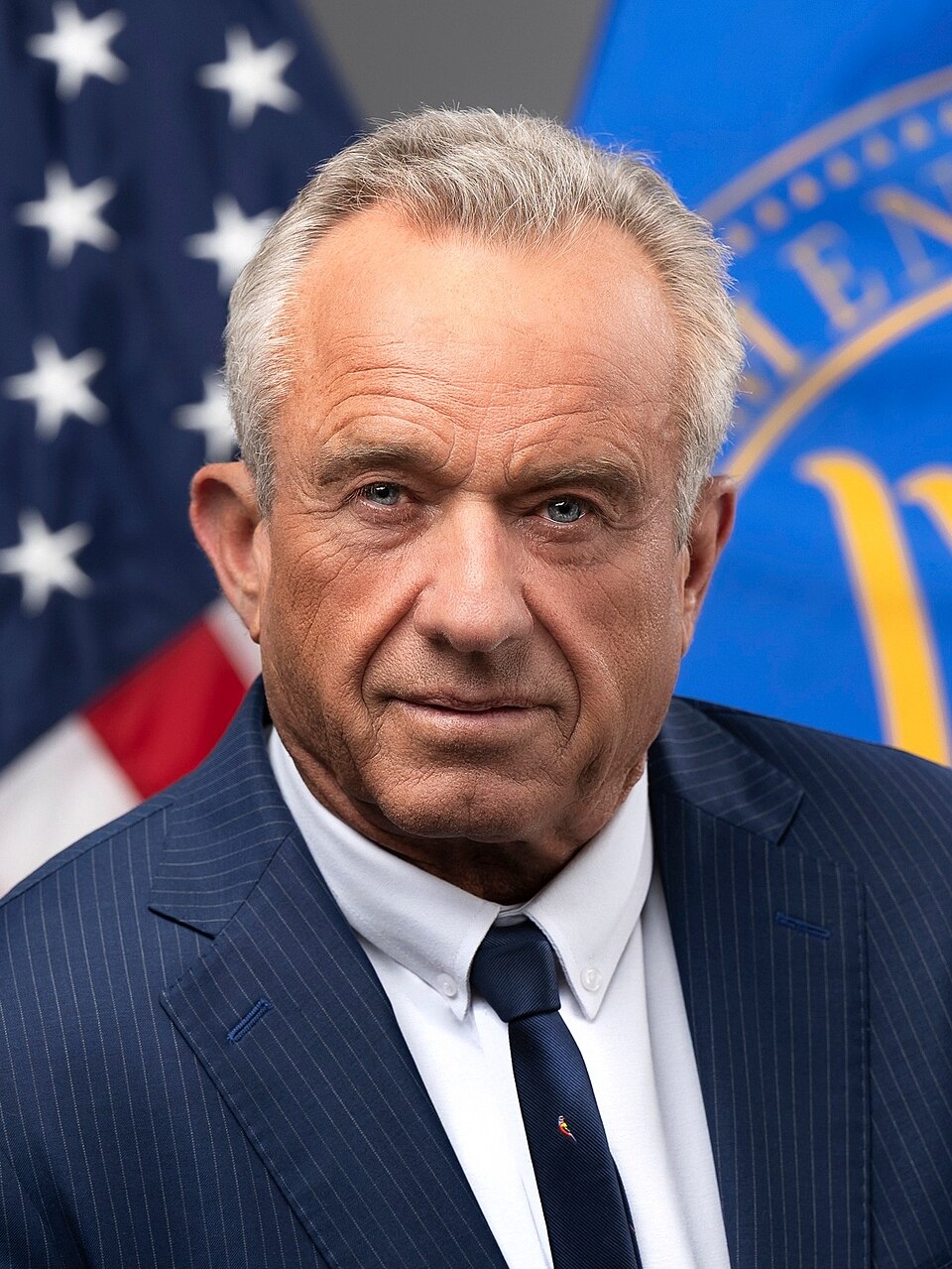
Robert Francis Kennedy Jr., born January 17, 1954, is a Kennedy family heir whose public identity has traveled an unusually volatile arc: environmental litigator, anti establishment crusader, and now cabinet level executive. He is the son of Senator and Attorney General Robert F. Kennedy and the nephew of President John F. Kennedy, a lineage that still frames how supporters and opponents interpret his motives, his access, and his willingness to wage war on institutions.
After graduating from Harvard with a BA in American history and literature, Kennedy earned a JD from the University of Virginia School of Law and later an LLM from Pace University. He began his professional life in law, briefly serving as an assistant district attorney in Manhattan before pivoting into environmental advocacy. In the 1980s and 1990s, he built a reputation through Riverkeeper and the Natural Resources Defense Council, and later helped found and lead the Waterkeeper Alliance, turning pollution enforcement lawsuits into a national brand of citizen driven environmental power.
That earlier career is not a footnote. It is the foundation of his governing style: confront the regulator, accuse the system of capture, and use litigation and media pressure to force compliance. He translated that posture into public health politics after 2005, promoting vaccine misinformation and broad public health conspiracy narratives. He later led and became the most visible national face of Children’s Health Defense, an anti vaccine advocacy group that pushed claims rejected by mainstream medical research, including the disproved assertion of a causal link between vaccines and autism.
Kennedy ran for president in 2024, first pursuing the Democratic nomination and later launching an independent campaign. He withdrew and endorsed Donald Trump, and in 2025 he entered the Trump cabinet as Secretary of Health and Human Services. The appointment instantly made him one of the most contested health administrators in modern memory: supporters see a disruptor who will expose conflicts of interest across pharma, food systems, and regulators; critics see a high profile amplifier of misinformation placed in charge of the country’s core health machinery.
As HHS Secretary, Kennedy sits on the choke points of American governance: CDC guidance, NIH research priorities, FDA oversight, and the architecture of federal public health messaging. His tenure is therefore interpreted less as routine management and more as a referendum on institutional trust. His allies want insurgent transparency. His opponents fear that converting skepticism into policy will degrade vaccine confidence, weaken crisis response, and politicize science.
Populist Independent
Achievements
- Built a nationally recognized environmental enforcement profile through Riverkeeper era litigation and advocacy, linking pollution control to public health and working class community protection.
- Helped found and scale the Waterkeeper Alliance, turning local waterways protection into an international model of citizen backed legal pressure.
- Popularized a populist anti capture frame that treats regulators, corporate incentives, and government secrecy as a single system that must be forced into transparency.
- Demonstrated sustained media reach and coalition building ability across ideological camps, mobilizing both environmental and anti establishment audiences over decades.
- Converted outsider movement status into formal executive authority by securing Senate confirmation to lead one of the largest federal departments.
Controversies
- Critics cite years of promoting false and scientifically disproved claims about vaccines, including autism related narratives and broader public health conspiracy themes.
- Opponents argue that elevating anti establishment skepticism into HHS leadership can weaken compliance and crisis response during outbreaks.
- Kennedy has promoted or platformed claims widely rejected by scientific consensus, creating repeated credibility conflicts for a health secretary role.
- His nomination triggered unusually unified opposition from Democrats and a subset of Republicans concerned about scientific governance and predictability.
- Critics question whether a grievance driven political style can translate into stable administration of CDC, NIH, FDA, and HHS wide operations.
Senate Confirmation Vote
Votes For
Votes Against