
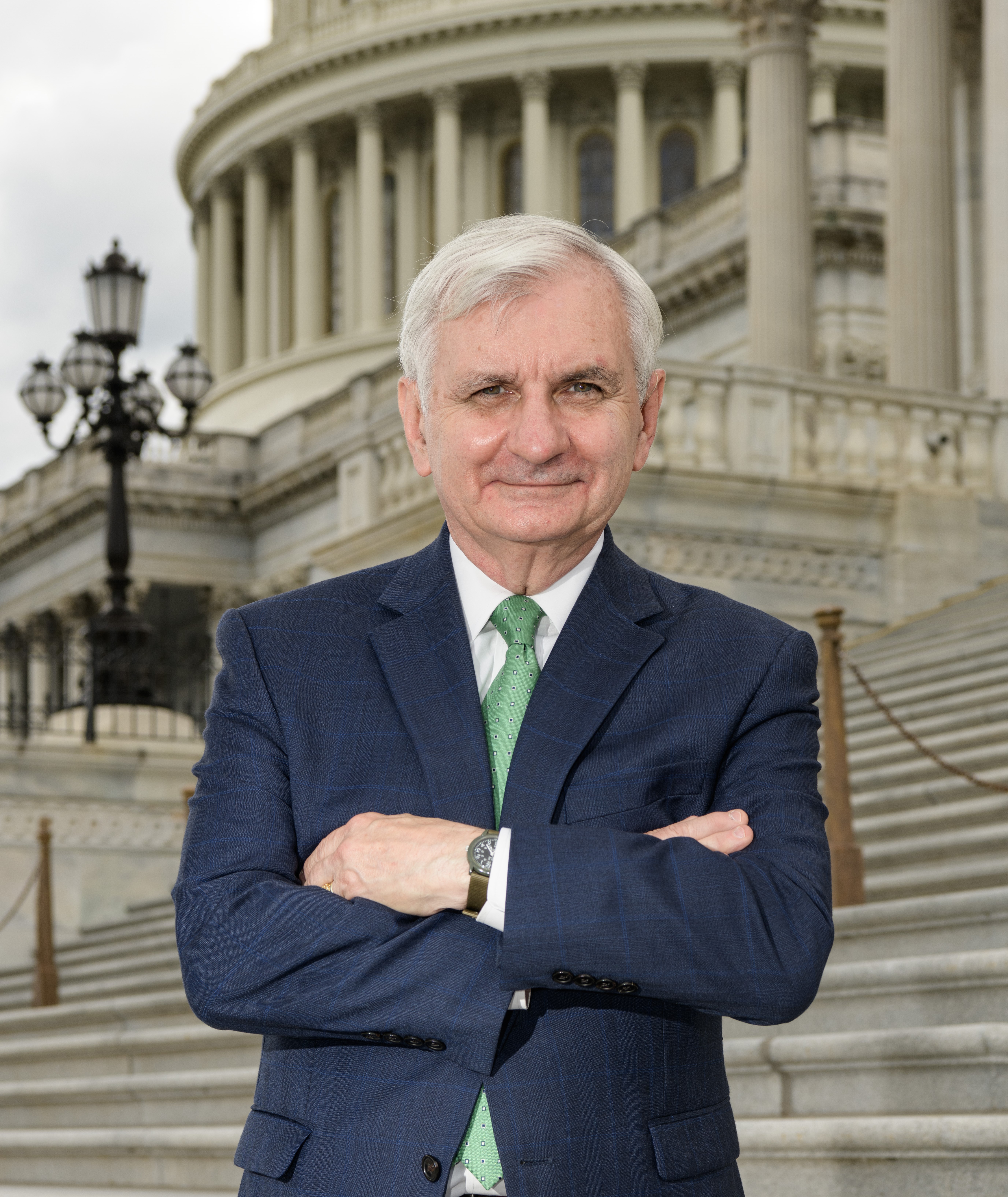
John Francis Reed is the senior United States senator from Rhode Island, serving since 1997. A lawyer and former Army officer, Reed is known as a disciplined, detail-driven legislator with a long-running focus on national security, veterans' affairs, housing, and education.
Born November 12, 1949, in Providence, Rhode Island, Reed graduated from the United States Military Academy at West Point (BS, 1971) and served on active duty in the U.S. Army from 1971 to 1979, earning the Ranger Tab and serving as a paratrooper in the 82nd Airborne Division. He later earned a Master of Public Policy from Harvard's Kennedy School and a JD from Harvard Law School.
Reed entered politics through the Rhode Island Senate (elected 1984), then won a U.S. House seat in 1990 (RI-02). In the U.S. Senate, he has combined a New England liberal voting profile on domestic policy with credibility on defense oversight, readiness, and military modernization, becoming a central player in the NDAA process and related appropriations.
Politically, Reed is best described as an establishment Democrat: reliably progressive on core domestic issues, but more institution-forward and security-oriented than the party's populist wing. He has remained electorally dominant in Rhode Island, consistently winning by lopsided margins.
Mainstream Liberal
Committee Assignments
Caucus Memberships
Achievements
- Became a leading Senate defense hand, shaping the annual NDAA and oversight of readiness, procurement, and strategic posture.
- Developed bipartisan credibility on national security while maintaining a consistently liberal domestic voting profile.
- Sustained advocacy on housing and community development through Banking Committee work and appropriations.
- Long-running focus on veterans' issues and military family policy, linking readiness to benefits and transition supports.
- Central Rhode Island political figure for decades, repeatedly winning re-election by large margins.
Controversies
- Criticized by progressive groups for supporting high defense toplines and prioritizing deterrence and modernization spending.
- Scrutiny around defense-industry-linked fundraising patterns given Armed Services jurisdiction and leadership.
- Faced issue-specific backlash over shifting posture on U.S. involvement in Yemen-era war-powers debates.
- Occasionally viewed as cautious toward the most aggressive financial-sector crackdowns, drawing left-flank criticism.
Top Donors
| Donor | Total | Individuals | PACs |
|---|---|---|---|
| Lockheed Martin | $54,800 | $46,800 | $8,000 |
| L3Harris Technologies | $54,725 | $39,725 | $15,000 |
| General Atomics | $41,650 | $32,650 | $9,000 |
| Greenberg Traurig LLP | $40,800 | $25,800 | $15,000 |
| RTX Corp | $31,460 | $19,460 | $12,000 |
Amounts shown reflect organization-linked giving; most funds listed here are from individual donors or aligned PACs.
Recent Elections

1996 Margin D +23%
2008 Margin D +37%
2014 Margin D +29%
2020 Margin D +33%