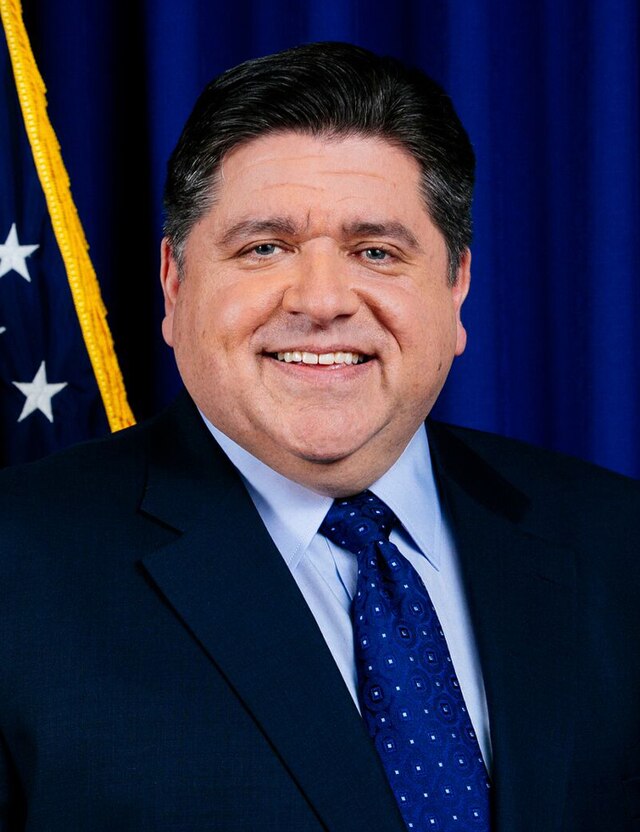
Jay Robert “J.B.” Pritzker is a businessman and philanthropist who has served as Illinois’s 43rd governor since 2019. Coming from the Pritzker family’s business empire, he entered politics with an executive-management pitch, arguing that Illinois needed a “capacity governor” to stabilize finances, modernize infrastructure, and expand social protections after years of budget and governance turmoil.
Pritzker’s governing program has blended mainstream Democratic coalition priorities with large-scale capital investment. His administration advanced one of the biggest infrastructure packages in state history to rebuild roads, bridges, transit, and schools, and he pushed a graduated income tax amendment as part of a broader effort to rebalance state revenue and address chronic fiscal pressures.
He also anchored his tenure in progressive policy wins that shaped Illinois’s national profile: legalizing recreational cannabis with an explicit equity framework, expanding healthcare and mental health access, and signing climate and energy legislation that set a long-run path toward 100% clean energy. During the COVID-19 era, he gained national attention for aggressive public health measures and frequent, message-driven press briefings.
Politically, Pritzker is often treated as a national Democratic figure, both because of Illinois’s policy output and because his wealth makes him a uniquely self-sufficient campaign actor. That self-funding profile gives him flexibility, but it also sharpens criticism around elite influence, property tax appeals, and tensions with business groups over labor and environmental regulation.
Mainstream Liberal
Achievements
- Legalized recreational cannabis in Illinois with an equity-focused framework.
- Passed one of the largest infrastructure investment programs in Illinois history.
- Expanded access to healthcare and mental health services.
- Advanced ambitious clean-energy transition policy targeting 100% clean energy by mid-century.
- Elevated Illinois’s national profile through a high-visibility executive governing style.
Controversies
- Criticized for property tax appeals that lowered bills on personal holdings.
- Faced sustained opposition over the proposed graduated income tax amendment.
- Tensions with business groups over labor and environmental policy direction.
- COVID-era restrictions drew backlash from opponents while supporters defended public health emphasis.
- Wealth and self-funding profile can sharpen “elite influence” critiques even among allies.
Recent Elections

2018 Margin D +15.0%

2022 Margin D +12.5%