
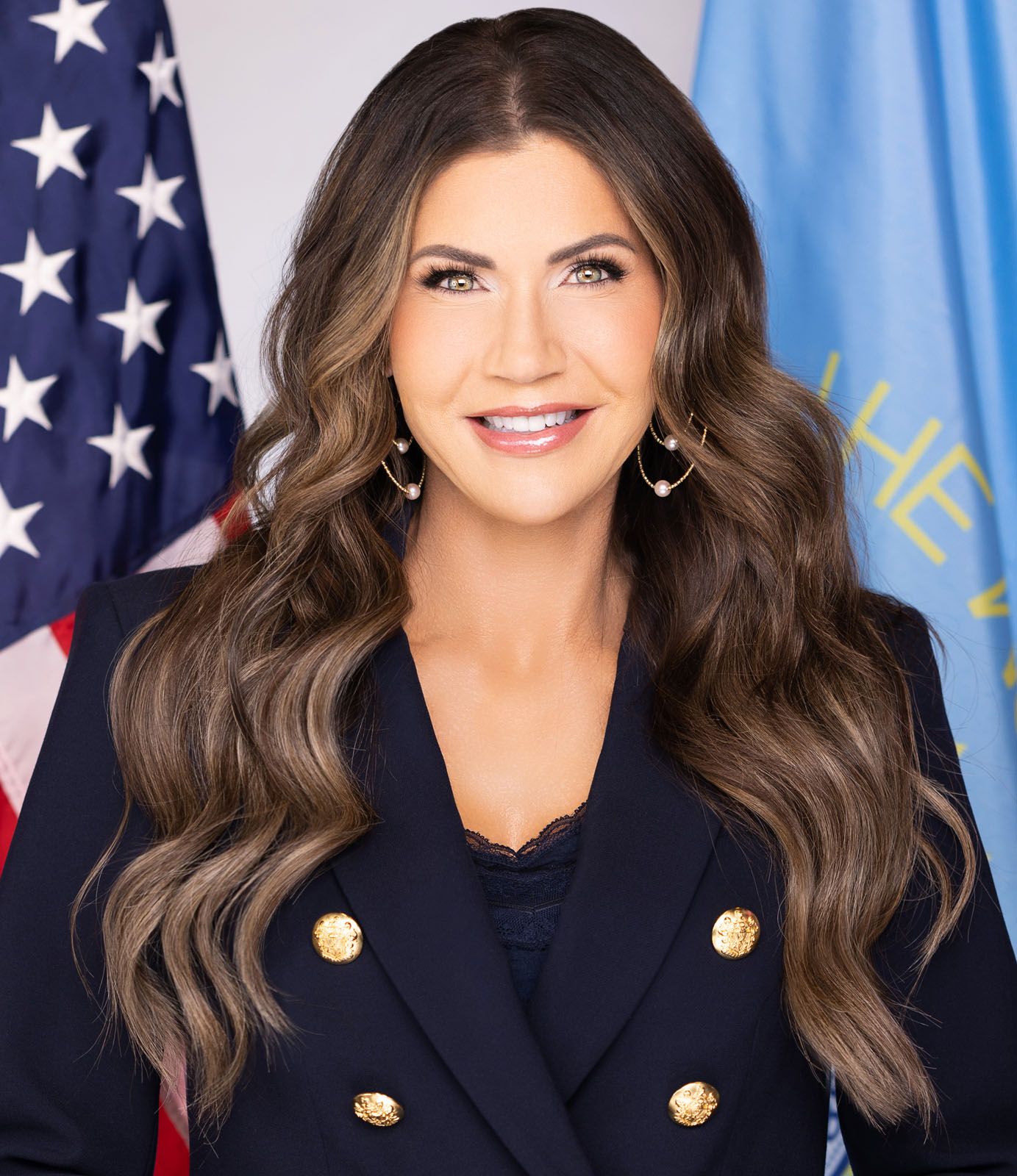
Kristi Lynn Arnold Noem is an American politician and former governor who became the 8th United States Secretary of Homeland Security in 2025. Before Cabinet service, she was the 33rd governor of South Dakota from 2019 to 2025 and represented South Dakota’s at-large district in the U.S. House of Representatives from 2011 to 2019. Her brand is not “bureaucratic manager” it’s executive posture, hard cultural messaging, and a border-first frame that treats immigration enforcement as the core test of state capacity.
Her political origin story is built for retail politics, a farm and ranch background near Hazel, South Dakota; leaving college after her father was killed in a grain-bin accident; and rebuilding the family operation. That becomes her governing persona a “handle it yourself” ethic that translates into skepticism of mandates, federal guidance, and what she labels professionalized administration.
As governor, Noem became nationally prominent during COVID-19 by refusing statewide mask mandates and positioning voluntary measures as freedom and normalcy. She paired that posture with aggressive conservative issue alignment: gun rights expansion, maximal abortion restrictions, anti-CRT and “divisive concepts” fights, and a constant emphasis on border spillover harms (fentanyl, trafficking, cartel logistics) even for interior states.
As DHS Secretary, her governing approach is force and speed: raids, removals, detentions, and public signaling meant to show that enforcement is not optional. She frames DHS as a domestic security instrument that must “reassert control” and treat the border as a battlefield system, surveillance, interdiction, custody, rapid processing, rather than a humanitarian intake pipeline. It’s designed to reassure the right that the state is willing to use power again, visibly.
Her public profile is unusually controversy-dense for a sitting Homeland Security secretary: high-salience culture fights from her governorship, headline personal scandals from her memoir, and a string of DHS-era disputes involving immigration process, ethics disclosure, high-profile incidents, and oversight pressure from Congress.
Right Wing Populist
Achievements
- Built a statewide executive brand as South Dakota’s first female governor, leveraging national media attention into a Cabinet portfolio centered on border and enforcement politics.
- Drove conservative policy outcomes in South Dakota including major gun policy expansions and maximal restrictions on abortion.
- Elevated “border spillover” messaging (fentanyl, trafficking, cartel networks) into a nationalized argument that small towns and interior states are direct victims of border failure.
- As DHS Secretary, moved early to public-facing enforcement operations and rapid policy reversals intended to demonstrate immediate control and deterrence.
- Maintains high alignment with the populist right’s coalition priorities: visible enforcement, cultural confrontation, and executive “do it now” governance.
Controversies
- Her 2024 book sparked national outrage for describing the killing of a young family dog, plus separate criticism over disputed or false-sounding claims about meetings with foreign leaders.
- She became one of the most visible anti-mandate governors, refusing statewide mask mandates and joining large, unmasked events; critics argue that posture worsened outcomes and politicized public health.
- Her administration faced a major scandal over actions around her daughter’s real-estate appraiser licensing process, including state personnel consequences and a settlement tied to a nondisclosure agreement.
- A prolonged standoff with South Dakota tribal nations followed her public comments linking reservations to cartel logistics, culminating in bans from tribal lands by multiple tribes.
- Her DHS tenure has drawn sustained criticism over raids, detention posture, and aggressive removals, with advocates warning of reduced due process and expanded coercive power.
- Articles of impeachment have been introduced citing oversight obstruction and public trust violations related to detention, arrests, and contracting decisions.
Senate Confirmation Vote
Votes For
Votes Against