
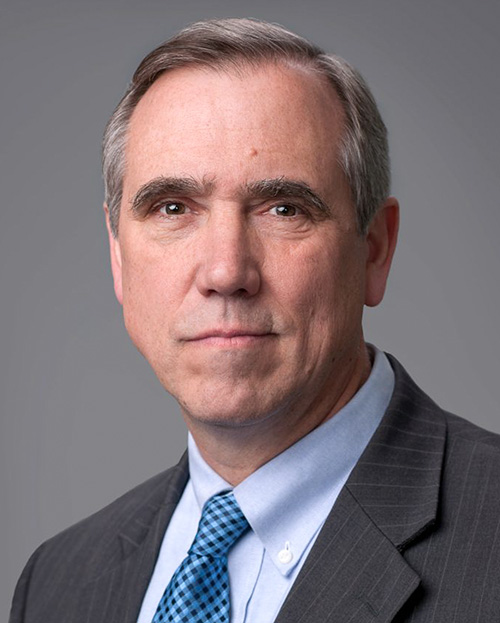
Jeffrey Alan Merkley has represented Oregon in the U.S. Senate since 2009 after unseating Republican incumbent Gordon Smith in 2008. A leading figure in the chamber’s progressive bloc, he is best known for climate action, housing and anti-poverty priorities, campaign-finance reform, and aggressive pushes to protect voting rights.
Before the Senate, Merkley served in the Oregon House of Representatives and was Speaker during the final two years of his tenure. Outside electoral politics, his early career included policy work in Washington (including the Congressional Budget Office) and hands-on housing and community development in Portland.
In Washington, Merkley became a central player in Wall Street regulation, co-authoring key Dodd–Frank provisions with the Merkley–Levin amendment (the Volcker Rule) to curb high-risk proprietary trading inside major banks. He’s also been a repeat Senate rules reform advocate, pushing “talking filibuster” concepts and broader changes to reduce minority obstruction.
Merkley’s political brand is combative-progressive: he has used long floor speeches, public stunts, and investigative pressure tactics to draw attention to issues like asylum policy, money in politics, and corporate consolidation. Supporters see him as a relentless reformer; critics argue he over-prioritizes ideological fights and under-invests in bipartisan dealmaking.
Progressive
Committee Assignments
Caucus Memberships
Achievements
- Co-authored major Wall Street safeguards in Dodd–Frank, including the Merkley–Levin Volcker Rule framework.
- Sustained national leadership on climate policy, clean energy investment, and environmental protection.
- Became a signature Senate voice on filibuster and procedural reform, repeatedly pushing “talking filibuster” and rules changes.
- Built a high-profile record on immigration and asylum oversight, including direct attention to detention conditions.
- Advanced housing affordability and anti-predatory lending priorities rooted in prior community-development work.
Controversies
- Frequently criticized by moderates for prioritizing progressive structural reforms over incremental deals.
- Business and finance groups have targeted him for aggressive regulation and anti-corporate influence proposals.
- Long floor speeches and confrontational tactics draw praise from activists but accusations of political theater from opponents.
- Conservative critics frame his climate and regulatory agenda as hostile to fossil-fuel jobs and heavy industry.
- Filibuster reform efforts have repeatedly stalled, drawing frustration inside the party over strategy and feasibility.
Top Donors
| Donor | Total | Individuals | PACs |
|---|---|---|---|
| League of Conservation Voters | $54,344 | $49,249 | $5,095 |
| Oregon Health & Science University | $48,117 | $48,117 | $0 |
| State of Oregon | $33,017 | $33,017 | $0 |
| University of Oregon | $31,120 | $31,120 | $0 |
| Oregon State University | $28,048 | $28,048 | $0 |
Amounts shown reflect reported cycle totals; “Individuals” vs. “PACs” are as provided.
Recent Elections

2008 Margin D +3.3%

2014 Margin D +18.8%
2020 Margin D +19.3%