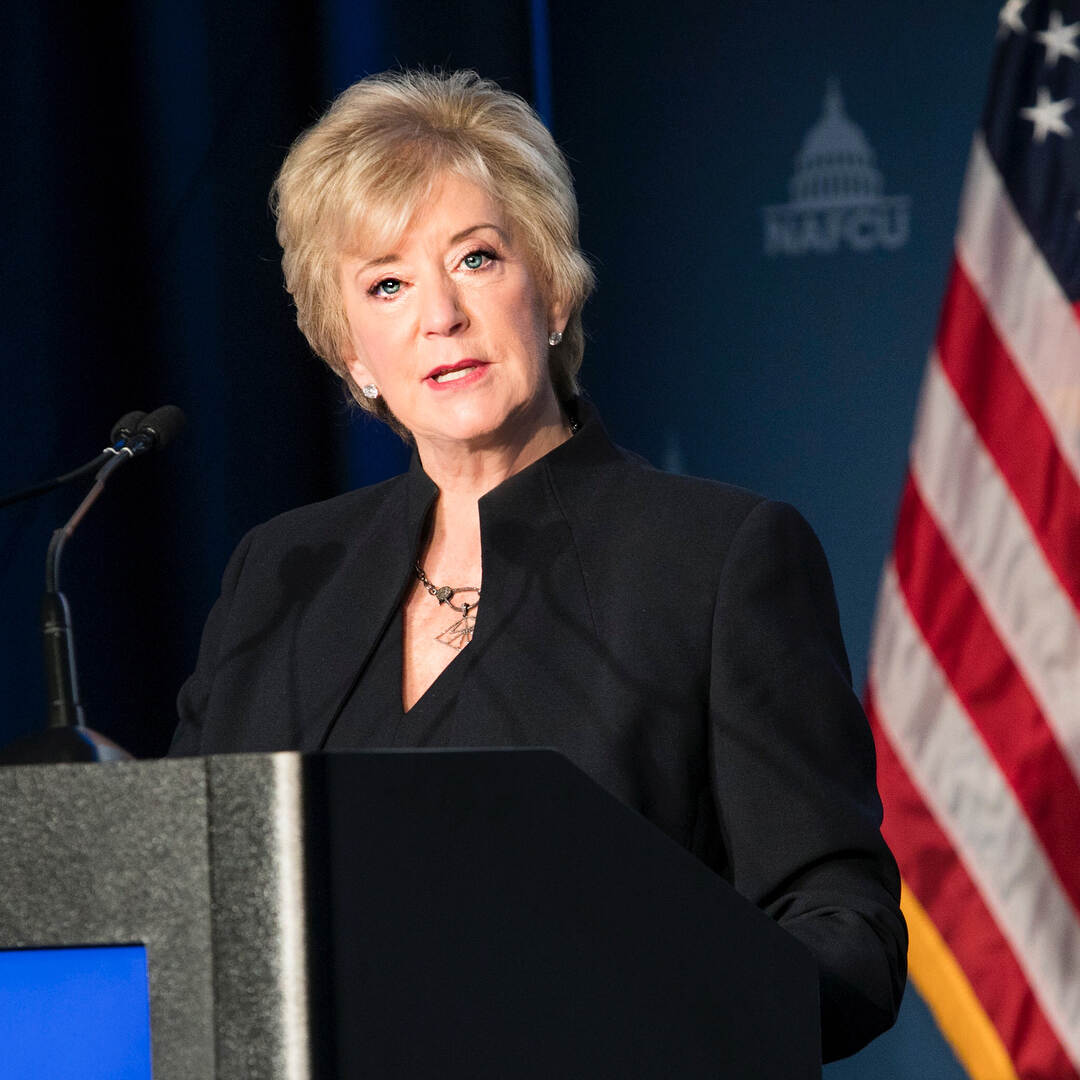
Linda Marie McMahon is an American administrator and business executive who has served as the 13th United States secretary of education since 2025. She previously served as the 25th administrator of the Small Business Administration from 2017 to 2019.
McMahon, along with her husband Vince McMahon, founded Titan Sports in 1980 (later World Wrestling Entertainment, WWE). She served as president and later chief executive officer from 1980 to 2009, overseeing the company’s expansion from a regional wrestling promotion into a multinational media and entertainment business. During her tenure she pushed major merchandising and media partnerships and helped launch civic programs such as Get R.E.A.L. and SmackDown! Your Vote.
After leaving WWE in 2009, she ran twice for the U.S. Senate in Connecticut as a Republican, losing to Richard Blumenthal in 2010 and Chris Murphy in 2012. In 2016, President elect Donald Trump nominated her to lead the SBA; she was confirmed in 2017 and later stepped down in 2019 to join Trump’s reelection effort.
In 2021, McMahon became the founding chairwoman of the America First Policy Institute, positioning herself as a key player in conservative policy infrastructure and transition planning. In late 2024, she was nominated to serve as secretary of education and was confirmed by the Senate on March 3, 2025.
As Education secretary, her profile is defined by a “competition and accountability” worldview: expanding school choice, emphasizing performance metrics, and elevating parents’ rights and “back to basics” messaging. Supporters frame her as a reformer who will challenge entrenched bureaucracy; critics argue her approach pressures public schools while advantaging privatization and ideological governance fights.
Right Wing Populist
Achievements
- Co founded Titan Sports and helped scale it into WWE, driving expansion through merchandising, media deals, and brand consolidation.
- Launched civic and outreach initiatives tied to WWE’s platform, including Get R.E.A.L. and SmackDown! Your Vote.
- Served as SBA administrator and positioned the agency around small business outreach, disaster response capacity, and pro growth messaging.
- Built a durable role inside conservative policy and transition networks as founding chairwoman of the America First Policy Institute.
- Entered Cabinet level governance with a “performance and accountability” frame that prioritizes measurable outcomes and structural disruption.
Controversies
- Critics argue her education agenda functions as privatization by another name, shifting resources away from traditional public systems.
- WWE era liabilities continue to follow her, including longstanding scrutiny around workplace culture and past scandals tied to the organization.
- “Parents rights” and curriculum fights are framed by opponents as politicizing schools, while supporters call it democratic accountability.
- Teachers unions and public education groups see her as hostile to labor protections and collective bargaining in K 12 systems.
- Her rise through partisan policy infrastructure raises conflict of interest and governance concerns about outside networks shaping federal education policy.
Senate Confirmation Vote
Votes For
Votes Against