
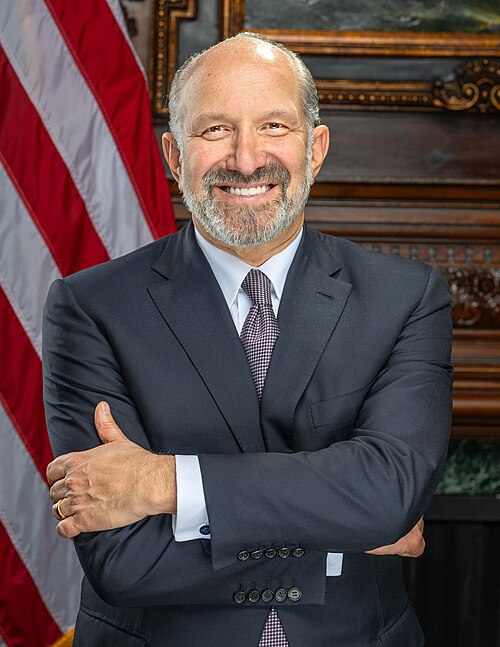
Howard William Lutnick is an American businessman and government official who has served as the forty first United States Secretary of Commerce since 2025. He is best known for leading Cantor Fitzgerald, where he became president and chief executive in 1990 and later chairman after B Gerald Cantor died in 1996. His core brand is blunt dealmaking and results testing: he treats credibility as a hard asset and performs very little tolerance for what he frames as fake promises or soft metrics.
Lutnick rebuilt Cantor Fitzgerald after September 11, 2001, when the firm lost 658 employees in the World Trade Center attacks, including his brother Gary. His leadership in the aftermath drew both praise for keeping the institution alive and criticism for decisions that families experienced as harsh, including the immediate stoppage of salaries. That episode sits at the center of his reputation: ruthless operational triage under extreme pressure.
In politics, Lutnick moved from being a fundraiser for Hillary Clinton in 2016 to becoming a major fundraiser and tariff proponent for Donald Trump, serving as a transition co chair in 2024. As Commerce Secretary, he has advocated aggressive tariff policy, and he has courted controversy for statements about Social Security payments and for ethics questions tied to his market commentary while in office.
He has also faced sustained scrutiny around his past contacts with Jeffrey Epstein, including public reporting on meetings and email logistics, and he testified about the relationship in early 2026, triggering bipartisan criticism and resignation calls. That issue has become a recurring political vulnerability alongside conflict of interest accusations tied to the overlap between Commerce power and family financial interests.
Mainstream Conservative
Achievements
- Built Cantor Fitzgerald into a durable fixed income and electronic trading institution, including heavy technology investment such as the eSpeed platform.
- Reconstituted firm operations after September 11, maintaining a functioning platform through surviving offices outside New York.
- Became a major political fundraiser and transition operator, with direct influence on staffing and economic agenda formation.
- Elevated tariffs and supply chain nationalism into a central Commerce message, selling it as enforcement and leverage.
- Recognized in 2025 by Time as one of the worlds 100 most influential people.
Controversies
- September 11 aftermath decisions, including salary stoppage, drew intense criticism from some families alongside praise from others.
- Aggressive tariff posture criticized for price shock risk and supply chain retaliation exposure.
- Ethics criticism tied to public market commentary while holding federal office and reported overlap between Commerce power and family financial interests.
- Social Security remarks triggered backlash and claims of insensitivity toward recipients.
- Epstein relationship reporting and subsequent testimony became a major political liability, prompting bipartisan condemnation and resignation calls.
Senate Confirmation Vote
Votes For
Votes Against