
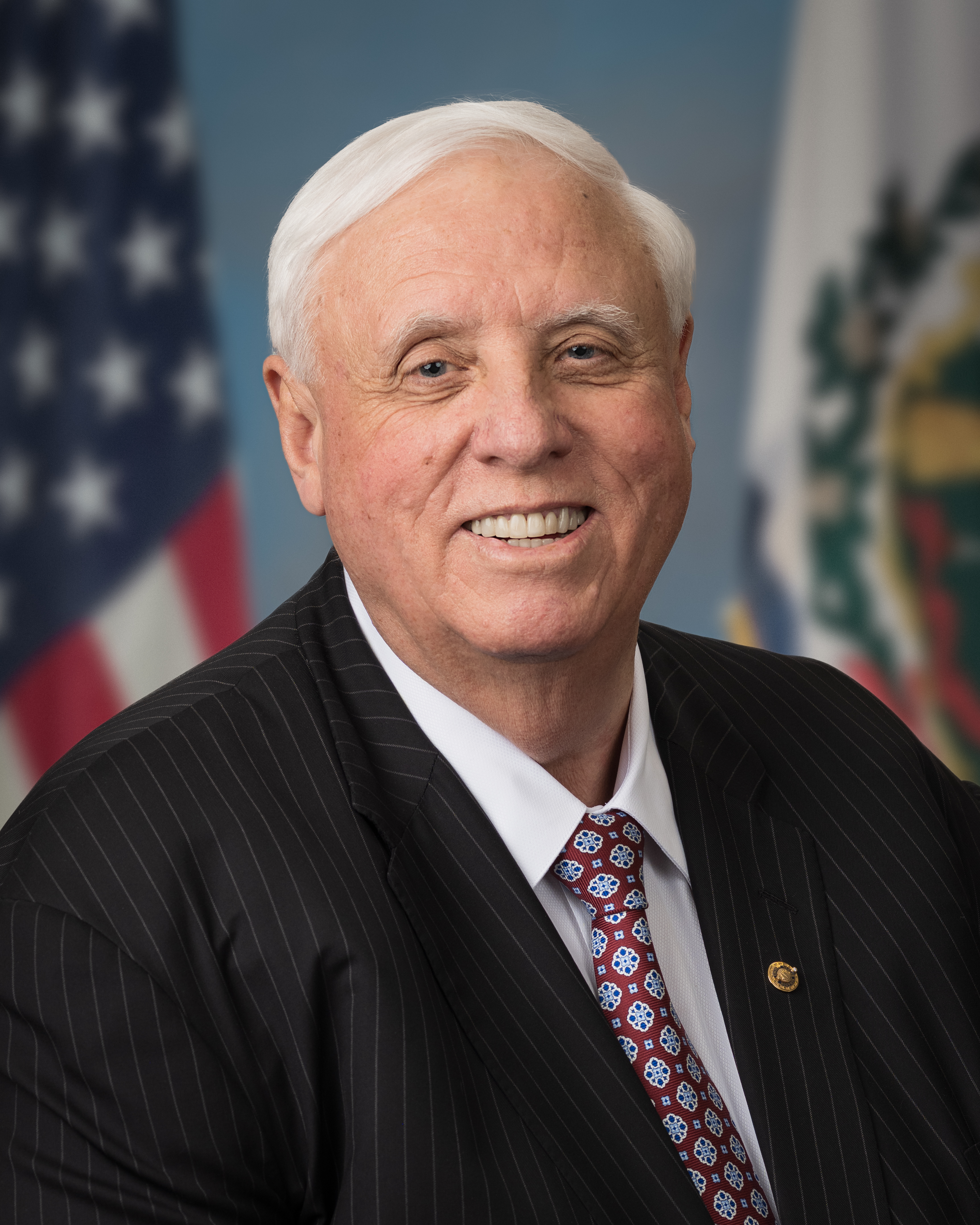
Jim Justice, born April 27, 1951 in Charleston, West Virginia, is a coal and agribusiness magnate who became one of the state’s most recognizable public figures long before he ran for office. He grew up in Raleigh County, played college golf, and earned both a bachelor’s degree and an MBA from Marshall University. His family holdings expanded across coal, farming, and real estate, and he became nationally famous in West Virginia as the owner of The Greenbrier resort in White Sulphur Springs.
Justice entered politics in 2016, running for governor as a Democrat despite having been registered as a Republican earlier in his life. He won the governorship on a culturally conservative, pro-coal message that emphasized jobs, tourism, and opioid response rather than national party identity. Less than seven months into his term, he switched back to the Republican Party at a rally with President Donald Trump, a move that hardened his populist image and aligned him with West Virginia’s rapidly shifting partisan landscape.
As governor from 2017 through early 2025, Justice mixed pro-energy politics with an unusually personal, showman style, often leaning on blunt humor and colorful metaphors. His COVID era visibility, including the “Do It for Babydog” vaccine messaging, gave him a distinct brand even outside the state. At the same time, his administration was regularly viewed through the lens of his business empire, with critics raising questions about debt, lawsuits, unpaid obligations, and the practical limits of separating public decision making from family owned enterprises.
In 2024, Justice won West Virginia’s open U.S. Senate seat, defeating Alex Mooney in the Republican primary and then winning the general election against Democrat Glenn Elliott, becoming the first Republican to capture that seat since 1956. He took office in January 2025 and quickly positioned himself as a full-throated defender of fossil fuels, rural seniors, and extraction state economics. His Senate profile is built around home state identity, energy politics, and a populist delivery style more than legislative detail.
Moderate Republican
Committee Assignments
Achievements
Won West Virginia’s 2024 U.S. Senate race by a massive margin, turning an open seat previously held by Joe Manchin into a clear Republican hold. The victory reflected both his personal popularity in-state and West Virginia’s long-term shift toward the GOP at the federal level.
Built a durable statewide brand as governor by emphasizing jobs, tourism, and a pro-energy posture, while leaning heavily into a plainspoken, retail-politics style. His messaging consistently framed coal and gas work as cultural identity and economic dignity.
Became nationally known during the COVID era for highly visible public briefings and vaccine promotion campaigns, including the “Do It for Babydog” push that blended humor with public health messaging. That visibility elevated him beyond a typical small-state governor profile.
Entered the Senate as one of the wealthiest members and positioned himself as a business-first advocate for rural states, arguing that capital investment, energy production, and regulatory restraint are the fastest path to stabilization for states facing demographic and industrial headwinds.
Controversies
Justice’s business empire has been shadowed by repeated reporting about debts, lawsuits, unpaid bills, and tax disputes. Opponents argue that the volume of litigation around his coal and resort holdings raises governance questions, while supporters frame it as the messiness of large legacy enterprises in a volatile industry.
His companies have faced scrutiny over mine safety compliance and unpaid penalties, generating negative national coverage even before his first gubernatorial campaign. Critics argue these issues undermine his pro-worker rhetoric, while allies counter that he preserved jobs by keeping operations running in difficult market conditions.
Justice’s party switch in 2017 became a defining moment of his political identity. To supporters, it aligned him with the state’s electorate and Trump-era Republicanism. To critics, it suggested opportunism and reinforced concerns about ideology being secondary to brand and leverage.
As governor, he was frequently accused of blurring personal and public roles, including questions about conflicts of interest and the practical limits of promised “blind trust” arrangements. His preference for informal, personality-driven governing also drew criticism that he avoided sustained accountability in traditional policy forums.
Top Donors
| Donor | Total | Individuals | PACs |
|---|---|---|---|
| Communicare Health Services | $92,400 | $92,400 | $0 |
| Pro-Israel America PAC | $46,500 | $46,500 | $0 |
| Triton Construction | $33,000 | $33,000 | $0 |
| Diversified Energy Co | $30,630 | $25,630 | $5,000 |
| Arch Resources | $24,100 | $14,100 | $10,000 |
Amounts shown reflect organization-linked giving most funds listed here are from individual donors or aligned PACs unless otherwise noted.
Recent Elections

Governor (As a Democrat)
2016
D +7%

Governor (Re-election)
2020
R +33%
U.S. Senate (West Virginia)
2024
R +41.0%
Party affiliation in 2016 was Democratic by 2020 and 2024 he was running as a Republican.