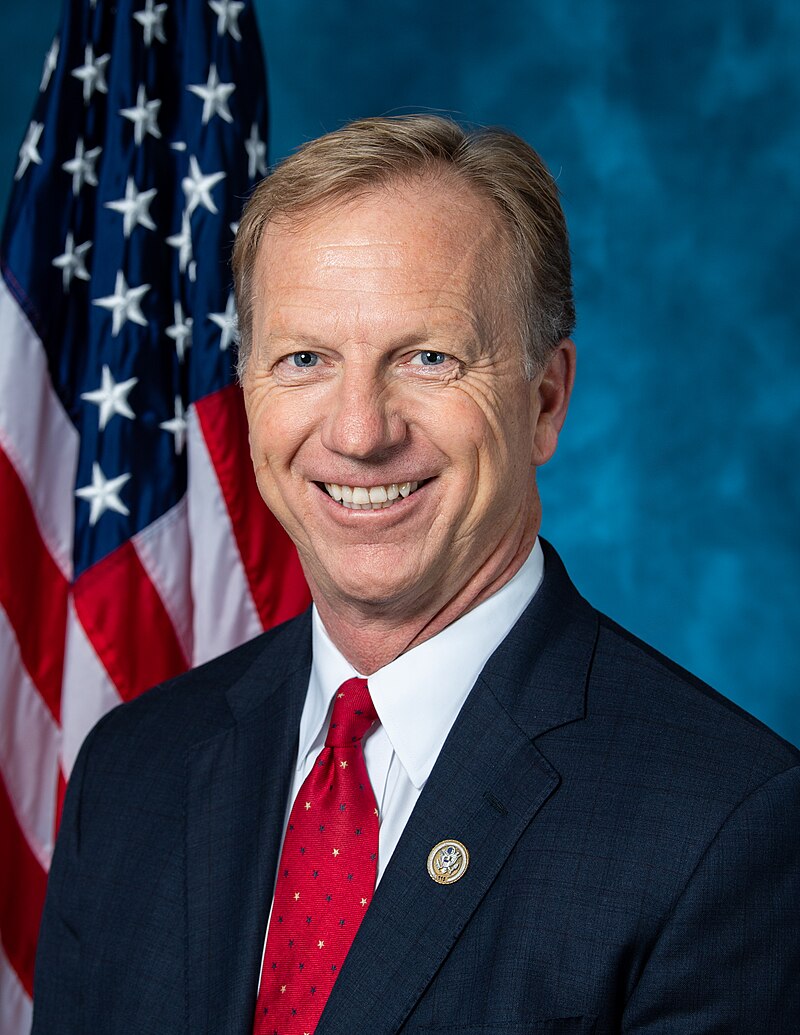
Kevin Ray Hern is an American politician and businessman representing Oklahoma's 1st Congressional District, which covers Tulsa and the surrounding northeastern Oklahoma region. Born on an Air Force base in western Missouri, he was raised in Pope County, Arkansas, after his parents separated. He graduated from Dover High School in 1980 and went on to Arkansas Tech University, where he earned his bachelor's degree in 1986. He briefly pursued a PhD in astronautical engineering at the Georgia Institute of Technology, leaving the program after the Space Shuttle Challenger disaster.
Hern's career pivot came through McDonald's. After working as an operations manager for several franchises in the Little Rock area throughout the late 1980s and early 1990s, he bought his first franchise in North Little Rock in January 1997. He later sold it and relocated to Muskogee, Oklahoma, acquiring two franchises there before expanding aggressively across the Tulsa metro area. By the time he ran for Congress in 2018, he owned 18 McDonald's franchises, earning him the local nickname "McCongressman." He completed his MBA at the University of Arkansas, Little Rock in 1999, the same year he moved to Oklahoma. He sold his last franchise in 2021.
Beyond his restaurant empire, Hern built a diverse portfolio of Oklahoma business ventures including a hog farm, a community bank, high school sports publications, and a furniture and decor manufacturing company that supplied major fast-food chains. By 2019 he was the wealthiest serving congressman from Oklahoma, with assets estimated between $36 million and $110 million as of 2023. His path to Congress opened in 2018 when Rep. Jim Bridenstine resigned to become NASA administrator. Hern advanced through a crowded Republican primary and runoff before defeating Democratic nominee Tim Gilpin in the general election. Oklahoma Governor Mary Fallin then appointed him to serve the remainder of Bridenstine's term, and he was sworn in on November 13, 2018.
In Congress, Hern has become one of the House's most prominent fiscal conservatives. He serves on the Ways and Means Committee, sitting on both the Tax and Health subcommittees, giving him direct influence over federal tax policy and healthcare financing. He became chair of the Republican Study Committee in 2023, the largest organized conservative caucus in the House, a platform he has used to advance detailed budget blueprints, entitlement reform proposals, and deregulatory agendas. He was twice nominated as a protest candidate for Speaker of the House in 2023, receiving votes during the chaotic January and October Speaker elections before ultimately endorsing Mike Johnson.
Mainstream Conservative
Fiscal ConservativeFiscal Progressive
Social ConservativeSocial Liberal
Current office
RSC Chair • U.S. Representative (OK-01)
Born
December 4, 1961 • Missouri (raised in Arkansas)
Background
Business owner • Former McDonald's franchisee
Education
Arkansas Tech (BS) • UALR (MBA)
Committee Assignments
Chair, Republican Study Committee (2023–)House Ways and Means CommitteeWays and Means Subcommittee on TaxWays and Means Subcommittee on Health
Caucus Memberships
Republican Study CommitteeCongressional Taiwan CaucusRare Disease Caucus