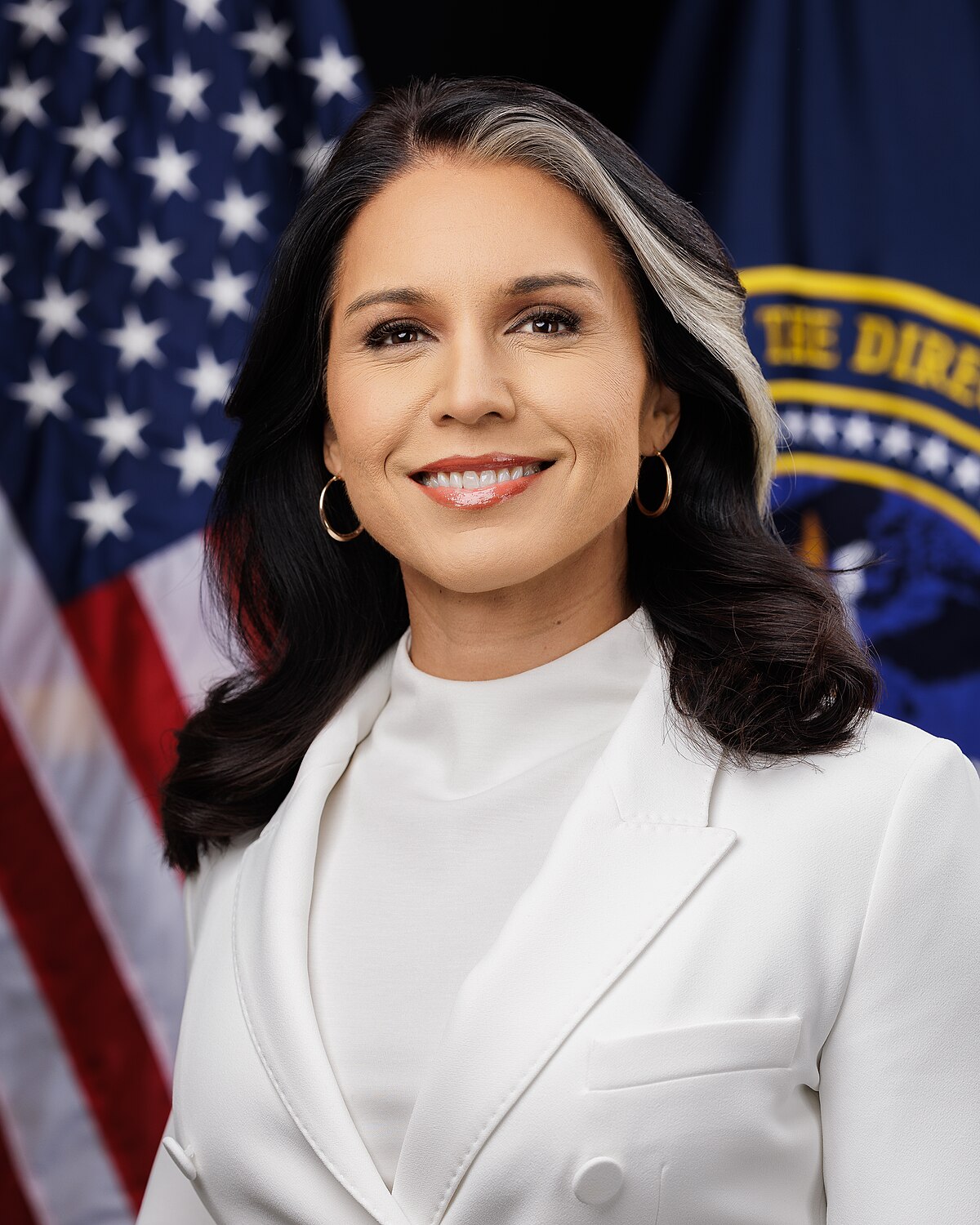
Tulsi Gabbard’s appointment to ODNI places a nationally visible political figure in a role designed to coordinate and arbitrate across the intelligence community. The DNI does not “run” the CIA or NSA day-to-day; the job is to integrate reporting, set collection priorities, produce the President’s Daily Brief pipeline, and manage how analytic judgments are presented to senior policymakers and Congress.
Gabbard’s public profile before ODNI combined military service, elective office, and high-salience foreign policy arguments. She served as a U.S. Representative and built a recognizable brand around skepticism of intervention, distrust of Washington consensus-making, and a preference for narrower definitions of U.S. interests in overseas conflicts.
In practice, that background suggests an emphasis on analytic transparency and on separating intelligence judgments from policy advocacy. Supporters expect more aggressive declassification where feasible, tighter sourcing standards in public-facing claims, and fewer ambiguous “trust us” assertions in politically sensitive disputes. Critics worry that a confrontational posture toward career officials could increase internal friction or discourage dissenting analysis.
Her civil-liberties language also intersects directly with ODNI responsibilities, especially oversight of cross-agency data sharing and U.S.-person query rules. Depending on how it is implemented, a “guardrails first” posture can mean stricter compliance, narrower domestic threat definitions, and heightened scrutiny of surveillance mission creep or, alternatively, it can be criticized as under-weighting prevention authorities.
On hard security threats, her positioning is not uniformly “dovish.” The more consistent pattern is targeted hardline emphasis on counterterrorism, border/counternarcotics networks, and cyber/infrastructure risk, paired with resistance to open-ended escalation logic and to framing regime-change as an intelligence inevitability rather than a policy choice.
Independent Populist
Achievements
- Pushes for clearer sourcing, explicit uncertainty, and more disciplined separation between intelligence judgments and preferred policy outcomes.
- Greater willingness to release supporting material where feasible, paired with risks around politicized “information wars” if releases are perceived as selective.
- Focus on surveillance scope, U.S.-person compliance, and constraints on expanding “domestic threat” labels beyond violence or operational coordination.
- Treats trafficking networks, fentanyl supply chains, and cartel finance as priority intelligence targets rather than purely law enforcement issues.
- Emphasis on defensive intelligence for grids, ports, pipelines, satellites, and supply-chain chokepoints, with an operational bias toward resilience.
Criticism
- Critics argue her public anti-intervention framing can underweight authoritarian intent and over-weight U.S. culpability as the default explanation in some conflicts.
- Skeptics warn that high-profile “reform” rhetoric can degrade continuity, increase politicization pressures, or encourage loyalty filtering.
- Criticism over close ties to Russian President Vladimir Putin and afilliated media.
- Ongoing ethics complaint regarding Gabbard that claims she is a compromised foreign agent.
- Detractors argue the office risks becoming a message platform; allies argue trust repair requires visible disruption.
Top Donors
| Donor | Total | Individuals | PACs |
|---|---|---|---|
| US Army | $73,627 | $73,627 | $0 |
| US Dept of Defense | $54,884 | $54,884 | $0 |
| State of Hawaii | $54,735 | $54,735 | $0 |
| Boeing Co | $54,248 | $33,248 | $21,000 |
| Mosaic Media Group | $50,400 | $50,400 | $0 |
Amounts shown reflect organization-linked giving; most funds listed here are from individual donors or aligned PACs.
Senate Confirmation Vote
Votes For
Votes Against