
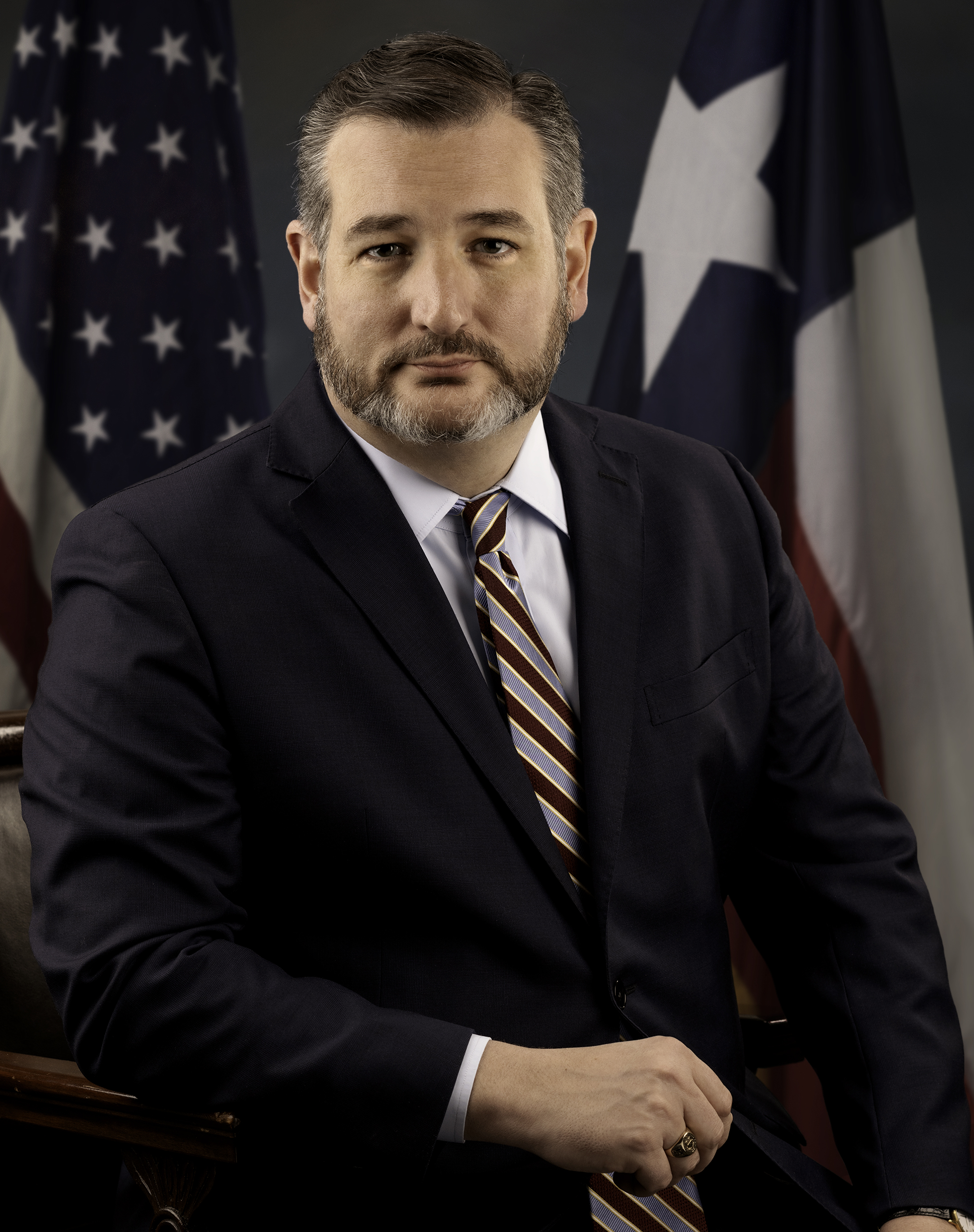
Rafael Edward “Ted” Cruz has represented Texas in the U.S. Senate since 2013, arriving as a Tea Party-backed insurgent who made his name by attacking Washington Republicans as often as Democrats. A Princeton and Harvard Law graduate, he built his early career inside the conservative legal world, clerkships, appellate litigation, and high-profile fights that helped him become a movement celebrity before he ever won elected office.
Cruz served as Solicitor General of Texas (2003–2008), arguing multiple cases before the U.S. Supreme Court and branding himself as a combative constitutional litigator. That pedigree shaped his Senate posture: aggressive oversight, maximalist rhetoric on executive power, and an instinct to turn procedural fights into national media moments. His 2013 shutdown-era strategy, attempting to force an Affordable Care Act rollback, cemented his identity as an uncompromising tactician.
Ideologically, Cruz sits at the intersection of movement conservatism and Trump-era populism. He is relentlessly conservative on taxes, regulation, guns, immigration, and culture-war issues, while also operating as a modern media politician with a national donor pipeline. Even when his policy priorities mirror standard GOP orthodoxy, he packages them as “anti-establishment” conflict with Democrats, the press, and the party’s institutional leadership.
Politically, Cruz is one of the most polarizing senators of his era. The right treats him as a reliable fighter; Democrats see him as a symbol of scorched-earth politics; and many Republicans privately view him as both talented and exhausting. His narrow 2018 reelection proved Texas can tighten under the right conditions, but his 2024 win reasserted a base-driven coalition built on turnout, border salience, and conservative media reach.
Conservative Populist
Committee Assignments
Achievements
- Built one of the strongest national conservative fundraising and small-dollar media machines in the Senate.
- Became a defining figure of movement conservatism in Congress, shaping the party’s incentive structure toward confrontation.
- High-impact judiciary and constitutional messaging influence, closely aligned with activist-right priorities.
- Central national voice on border security and asylum restriction inside the GOP coalition.
- Senior institutional influence via major committee seats, now chairing Commerce, giving him leverage over telecom, tech, aviation, and space policy.
Controversies
- Severe backlash for the 2021 Cancún trip during the Texas winter storm crisis.
- Major criticism for his role in challenging/contesting the 2020 presidential election certification process.
- Frequent intra-party friction: accused of grandstanding and burning institutional trust even among Republicans.
- Viewed by opponents as a politician who prioritizes ideological purity and media conflict over bipartisan bargaining.
- Long-running attacks that his posture is performative, self-promotional, and aimed at national ambitions more than Texas-specific governance.
Top Donors
| Donor | Total | Individuals | PACs |
|---|---|---|---|
| American Israel Public Affairs Cmte | $562,877 | $552,877 | $10,000 |
| Senate Conservatives Fund | $267,076 | $249,576 | $17,500 |
| Club for Growth | $120,644 | $120,644 | $0 |
| Republican Jewish Coalition | $81,027 | $71,027 | $10,000 |
| Herzog Contracting | $77,900 | $72,900 | $5,000 |
Amounts shown reflect organization-linked giving; most funds listed here are from individual donors or aligned PACs.
Recent Elections

2012 Margin R +16.1%

2018 Margin R +2.6%

2024 Margin R +9.5%