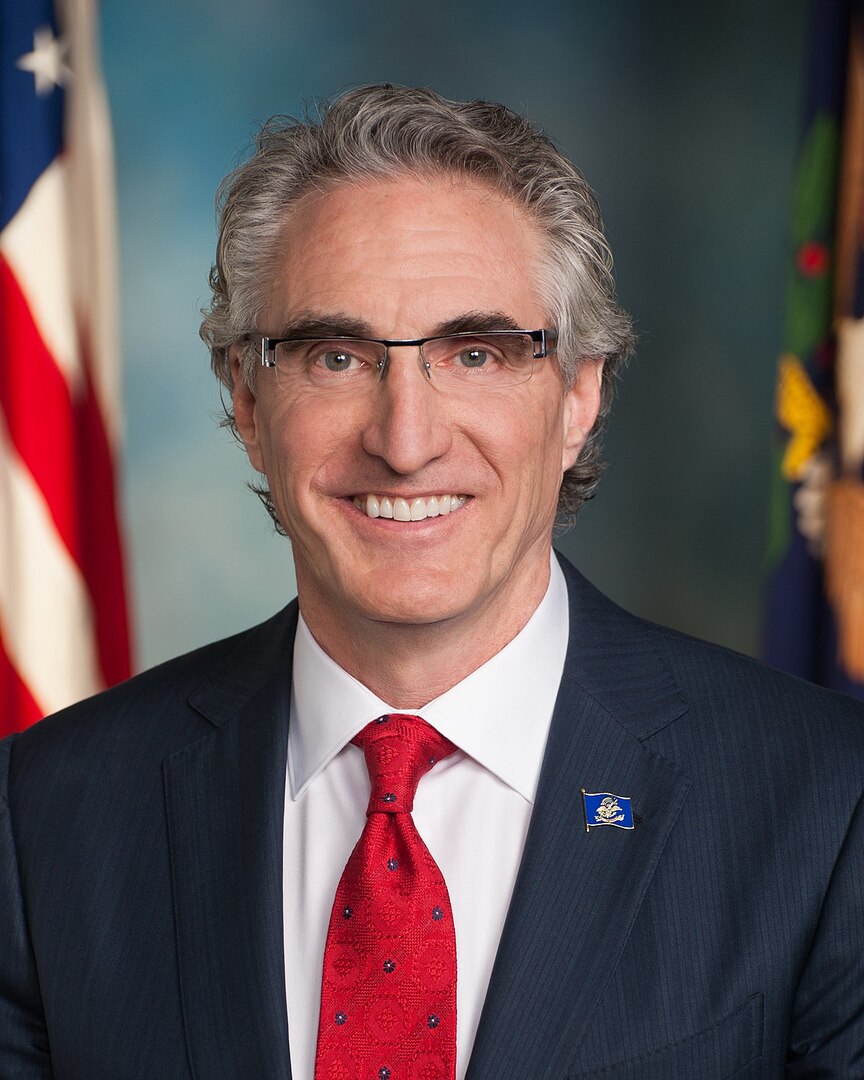
Douglas James Burgum is an American businessman and Republican politician who has served as the 55th U.S. Secretary of the Interior since 2025. Before entering federal office, he served as the 33rd Governor of North Dakota from 2016 to 2024, building a reputation as a tech-forward executive focused on investment, infrastructure, and energy-driven growth.
Burgum’s origin story is corporate: he mortgaged inherited farmland in the early 1980s to invest in Great Plains Software, scaled it into a national accounting-software player, and sold it to Microsoft for roughly $1.1 billion. That background shows up in his governing style, metrics, execution, and “systems” thinking, and in his rhetorical frame: innovation beats bureaucracy.
At Interior, Burgum is positioned at the collision point of federal land, energy dominance, permitting, and conservation. Supporters see a practical manager who can translate the administration’s instincts into implementable policy. Critics see an extraction-first worldview that treats public lands as an economic balance sheet rather than an ecological trust.
Politically, he presents as pro-business and development-friendly, emphasizing domestic production (oil, gas, and strategic minerals) and “innovation over regulation.” His profile sits in the moderate-to-mainstream lane inside the GOP, with an executive/CEO cadence that plays well in boardrooms and statehouses.
Moderate Republican
Achievements
- Built a “CEO-governor” reputation in North Dakota centered on investment attraction, execution, and economic growth.
- Brought private-sector operational framing (permitting, timelines, outcomes) into Interior’s land-and-energy portfolio.
- Positioned domestic production of energy and strategic minerals as a national-security lever.
- Maintained credibility with business and tech networks that translate into donor and stakeholder support.
- Branded “innovation over regulation” as an organizing principle for resource development and federal land management.
Controversies
- Criticized for prioritizing extraction over conservation in relation to public lands.
- Accused by opponents of using “innovation” language to repackage deregulation and faster drilling approvals.
- Environmental groups argue his “middle lane” delays meaningful emissions reductions in practice.
- Tension between federal authority and state/industry influence on land-use decisions.
- Seen by critics as too aligned with energy and capital networks to be a neutral steward of public resources.
Top Donors
| Donor | Total | Individuals | PACs |
|---|---|---|---|
| Abbott Laboratories | $4,000,010 | ||
| Farrington Rocket LLC | $3,000,000 | ||
| Benchmark Capital | $1,000,000 | ||
| Tharaldson Hospitality Management | $1,000,000 | ||
| Microsoft Corp | $511,422 |
Amounts shown reflect organization-linked giving; most funds listed here are from individual donors or aligned PACs.
Senate Confirmation Vote
Votes For
Votes Against