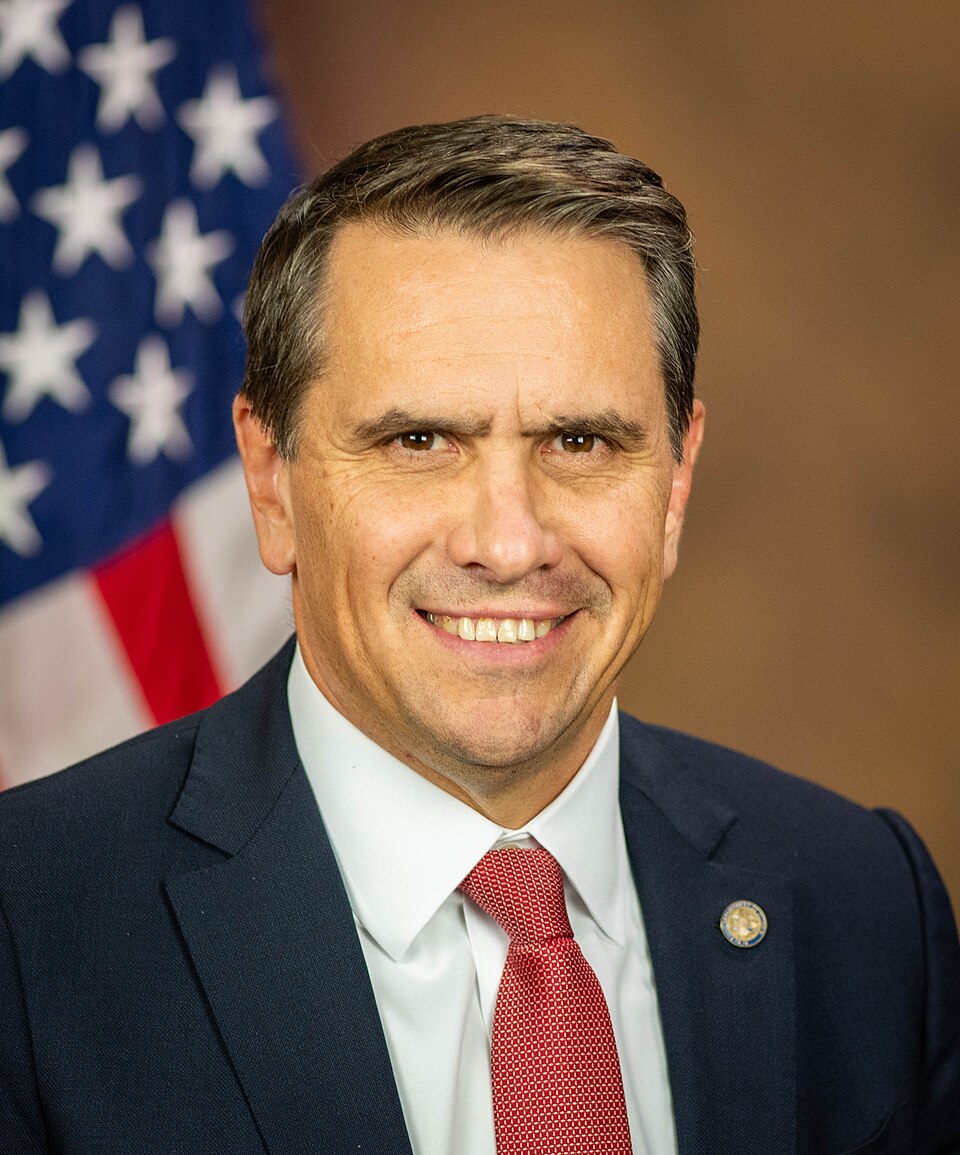
Todd Wallace Blanche is an American attorney and former federal prosecutor born on August 6, 1974, in Denver, Colorado. His father Richard was a Canadian hockey player and his mother worked as a nurse. After the Colorado Supreme Court ruled against his father over a zoning dispute involving a religious congregation the family held in their basement, the Blanches relocated to Gainesville, Florida, in 1987. Blanche attended the New Mexico Military Institute, where he was described as a standout athlete, before studying at Louisiana State University and then transferring to Beloit College, where he played basketball and baseball. He ultimately transferred to American University, graduating in 1994. He met his wife Kristine, a biology major at Catholic University of America, in Australia, and the two settled in the Washington area, where Blanche began his legal career. He graduated cum laude from Brooklyn Law School in 2003, having attended night school while working as a paralegal at the United States Attorney's Office for the Southern District of New York.
After law school, Blanche clerked for Judge Denny Chin in the Southern District of New York and Judge Joseph F. Bianco in the Eastern District of New York before returning to the U.S. Attorney's Office for the Southern District of New York in 2006 as an assistant United States attorney. He spent eight years in the office's violent crimes division, eventually becoming its co-chief, and also ran the district's White Plains branch office alongside Mimi Rocah. Colleagues reportedly believed he had been marked for a judicial nomination. He left in 2014 to join WilmerHale as a partner and then moved to Cadwalader, Wickersham and Taft as a partner in 2017, where he began representing prominent clients including Trump's former campaign manager Paul Manafort, businessman Igor Fruman, and attorney Boris Epshteyn. Blanche was a registered Democrat prior to representing Donald Trump and switched his party affiliation to Republican in 2024.
In April 2023, one day before Trump's arraignment in the Manhattan hush money case, Blanche joined Trump's defense team and subsequently founded Blanche Law. He led Trump's defense across the New York hush money trial, the federal classified documents case, and the federal election obstruction case. The jury unanimously convicted Trump in the New York trial in May 2024. In November 2024, following Trump's presidential victory, Trump named Blanche as his nominee for Deputy Attorney General. The Senate Judiciary Committee advanced his nomination 12 to 10 along party lines in February 2025 and the full Senate confirmed him 52 to 46 in March 2025. In May 2025, Trump dismissed Librarian of Congress Carla Hayden and appointed Blanche to succeed her, an appointment disputed by Library of Congress staff who recognized the principal deputy librarian Robert Newlen as the lawful acting successor. In April 2026, after Trump fired Attorney General Pam Bondi over her handling of the Epstein files, Blanche became the acting United States Attorney General.
As Deputy Attorney General and then Acting Attorney General, Blanche has been one of the most consequential and controversial figures in the second Trump administration's Justice Department. He reorganized federal law enforcement task forces to prioritize immigration enforcement, dismissed the pardon attorney after she refused to add Mel Gibson to a list of individuals whose gun rights should be restored, proposed merging the Drug Enforcement Administration with the Bureau of Alcohol Tobacco Firearms and Explosives, oversaw a complex and disputed handling of the Jeffrey Epstein files including a personal meeting with Ghislaine Maxwell, directed immigration prosecutions in sanctuary jurisdictions, and took increasingly aggressive stances on deploying federal law enforcement in politically sensitive contexts including a statement expressing puzzlement at objections to deploying ICE officers at polling places for the 2026 midterms. His concurrent appointment as Acting Librarian of Congress has faced legal challenges from Library of Congress staff who argue it exceeds the president's appointment authority.
Conservative Populist
Achievements
- Confirmed as United States Deputy Attorney General in March 2025 after a 52 to 46 Senate vote, becoming one of the highest-ranking law enforcement officials in the country following a career that spanned eight years as a federal prosecutor in the Southern District of New York's violent crimes division, where he rose to co-chief of the division and branch chief in White Plains.
- Led Donald Trump's legal defense across three simultaneous criminal prosecutions, including the New York hush money trial, the federal classified documents case at Mar-a-Lago, and the federal election obstruction case, representing the most high-profile criminal defense work undertaken by any attorney in the contemporary United States legal system and building an unusually close personal and professional relationship with a sitting president.
- Issued sweeping early directives as Deputy Attorney General reshaping Department of Justice priorities, including Operation Take Back America reorganizing federal task forces around immigration enforcement, a proposal to merge the DEA and ATF into a unified agency, and a hiring memorandum shifting DOJ resources toward the southern border, representing among the most aggressive structural changes to the department undertaken in the opening months of a new administration.
- Became Acting Attorney General in April 2026 following Pam Bondi's dismissal, ascending to the top law enforcement position in the United States government after a trajectory that took him from night law school and federal prosecution to private practice defending Trump across multiple jurisdictions, and then into confirmed Senate positions at the highest levels of the executive branch within two years of Trump's second inauguration.
Controversies
- Dismissed pardon attorney Liz Oyer after she refused his request to add actor Mel Gibson to a list of individuals who should have their gun rights restored, an action that drew criticism from legal ethicists who argued the dismissal represented improper political interference in the pardon process and that restoring firearm rights for a figure without a pending pardon petition was outside the normal scope of that office.
- Personally met with Ghislaine Maxwell in a two-day session following the Jeffrey Epstein files controversy, allowing Maxwell's attorney David Oscar Markus to access grand jury testimony prior to the meeting in a move critics argued could have given Maxwell information useful for seeking an appeal, and defended her subsequent transfer to a minimum security prison, drawing accusations from Senate Democrats including Chuck Schumer and Dick Durbin that Blanche may have offered Maxwell favorable treatment to prevent her from implicating Trump.
- Ordered the arrest of Newark mayor Ras Baraka over an incident at an immigration detention center, a decision that drew national attention and criticism from civil liberties organizations who argued the arrest of an elected local official over an immigration enforcement dispute represented a dangerous expansion of federal prosecutorial power against political opponents of the administration's immigration agenda.
- Said at the Conservative Political Action Conference in March 2026 that he did not understand objections to deploying ICE officers at polling places for the 2026 midterm elections, a statement that drew widespread condemnation from election law experts and voting rights advocates given that federal law generally prohibits the deployment of armed federal law enforcement at polling places, and which senators from both parties characterized as a threat to the integrity of federal elections.
Top Donors
No donor information available. Todd Blanche is an appointed official and has not run for elected office.
The organizations themselves cannot donate; totals reflect contributions from individuals and PACs affiliated with each entity.